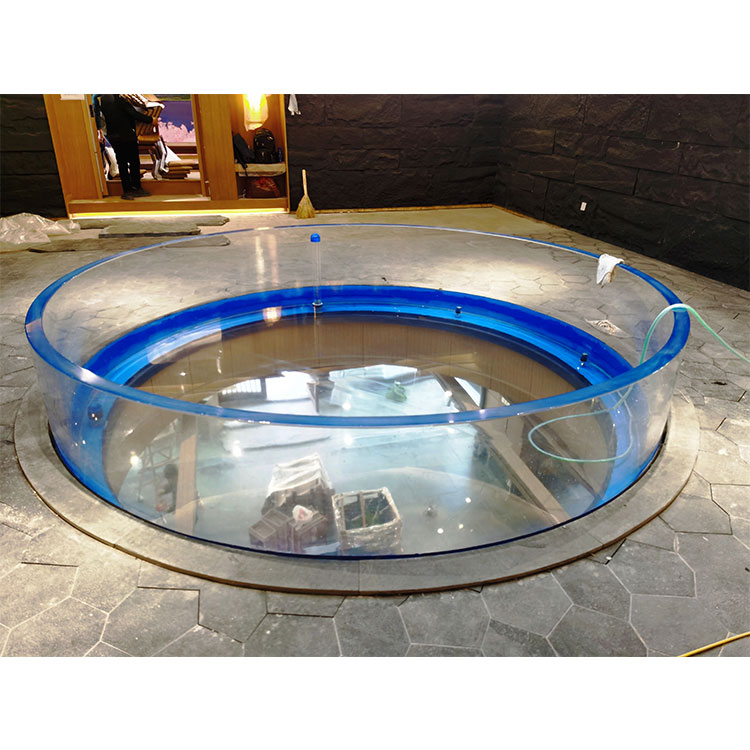
What Is an Acrylic Fish Tank Aquarium?
An acrylic fish tank aquarium is a transparent aquatic structure manufactured primarily from acrylic, also known as PMMA. Acrylic panels are accurately cut, machined and bonded to form the aquarium structure.
Compared with traditional glass aquariums, acrylic offers several advantages for customized applications. It is lightweight, highly transparent, impact resistant and relatively easy to machine into complex shapes. These characteristics make acrylic particularly suitable for large aquariums, curved viewing panels, cylindrical tanks, underwater tunnels and architectural aquatic installations.
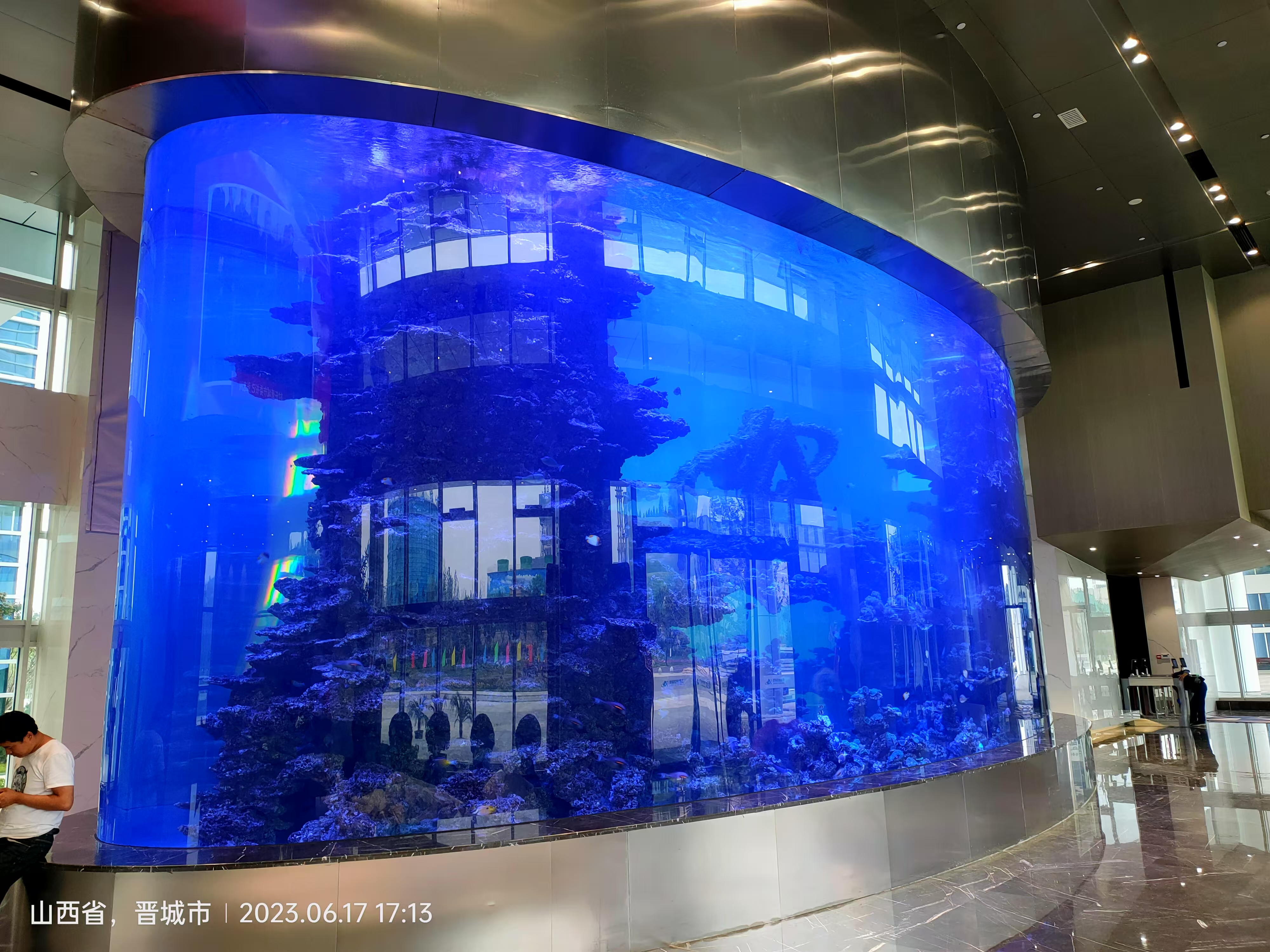
Acrylic aquariums can be manufactured for different applications, including residential fish tanks, commercial displays, aquarium restaurants, hotels, resorts, public aquariums and oceanariums.
However, the larger the aquarium becomes, the more important professional structural design and fabrication become. Water pressure, panel deflection, acrylic thickness, joint design, reinforcement, support conditions, transportation and installation must all be considered before manufacturing.
How to Build an Acrylic Fish Tank Aquarium: Quick Answer
If you want to build an acrylic fish tank aquarium, the basic process is:
Determine the aquarium size → select suitable cast acrylic → calculate or evaluate panel thickness → design the structure → CNC cut the panels → prepare the bonding surfaces → bond the acrylic panels → allow the structure to cure → polish the visible surfaces → install equipment → perform a water test → complete installation.
For a small DIY acrylic aquarium, many of these steps can be completed by an experienced hobbyist.
For a large acrylic fish tank, professional aquarium fabrication is recommended because the tank must safely withstand continuous hydrostatic pressure while maintaining optical clarity and structural integrity.

Acrylic custom fish tank - factory

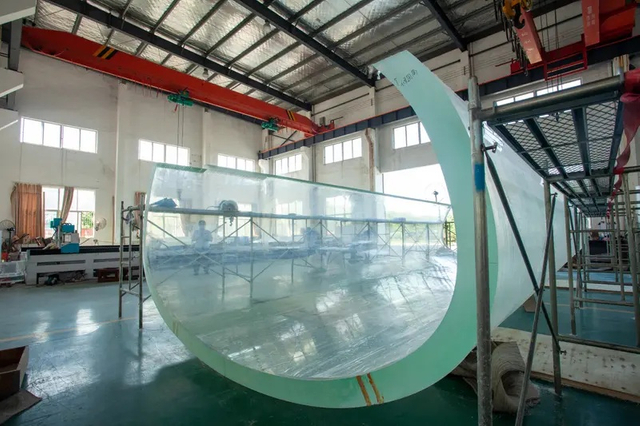
Acrylic custom fish tank - factory

Acrylic custom fish tank - factory
Why Use Acrylic to Build a Fish Tank Aquarium?
Excellent Optical Clarity
Clear acrylic provides excellent transparency and allows viewers to enjoy an unobstructed view of fish, coral, plants and underwater environments.
For commercial aquariums and public aquatic attractions, optical clarity is especially important because the viewing panel is often one of the most visually important elements of the project.
Lightweight Construction
Acrylic is significantly lighter than glass of comparable dimensions. This can reduce handling difficulties during transportation and installation.
The weight advantage becomes particularly valuable for large aquarium viewing panels and architectural aquatic structures.
High Impact Resistance
Acrylic offers excellent impact resistance compared with conventional glass, making it an attractive material for many commercial and public aquarium applications.
This is particularly useful where large viewing panels are installed in hotels, restaurants, entertainment facilities, public aquariums and other high-traffic environments.
Flexible Customization
One of the most important advantages of acrylic is its fabrication flexibility.
Acrylic can be cut, machined, drilled, polished, bonded and thermoformed to create customized structures such as:
Rectangular acrylic fish tanks
Large acrylic aquariums
Cylindrical acrylic fish tanks
Curved acrylic aquariums
Acrylic aquarium viewing windows
Underwater acrylic tunnels
Acrylic dome windows
Large oceanarium viewing panels
Aquarium restaurant windows
Acrylic swimming pool windows
Infinity pool viewing panels
Special-shaped aquatic structures
Suitable for Large Aquatic Projects
Acrylic is particularly valuable when a project requires large transparent viewing surfaces.
Instead of restricting the design to standard rectangular glass panels, architects and aquarium designers can use acrylic to create larger and more complex transparent structures.
Cast Acrylic vs. Extruded Acrylic for Aquariums
Selecting the correct acrylic is one of the first decisions when building an acrylic fish tank aquarium.
For demanding structural aquarium applications, clear cast acrylic is generally preferred because of its fabrication, machining and bonding characteristics.
When purchasing acrylic for an aquarium, it is important not to select material based solely on price.
Ask the supplier about:
For professional aquarium projects, the acrylic material should be considered together with the overall structural design.
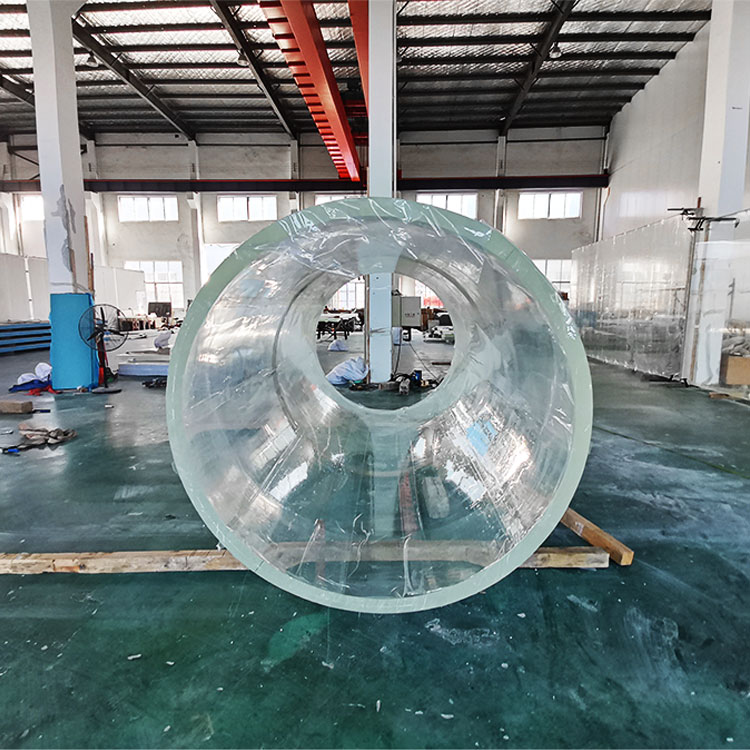
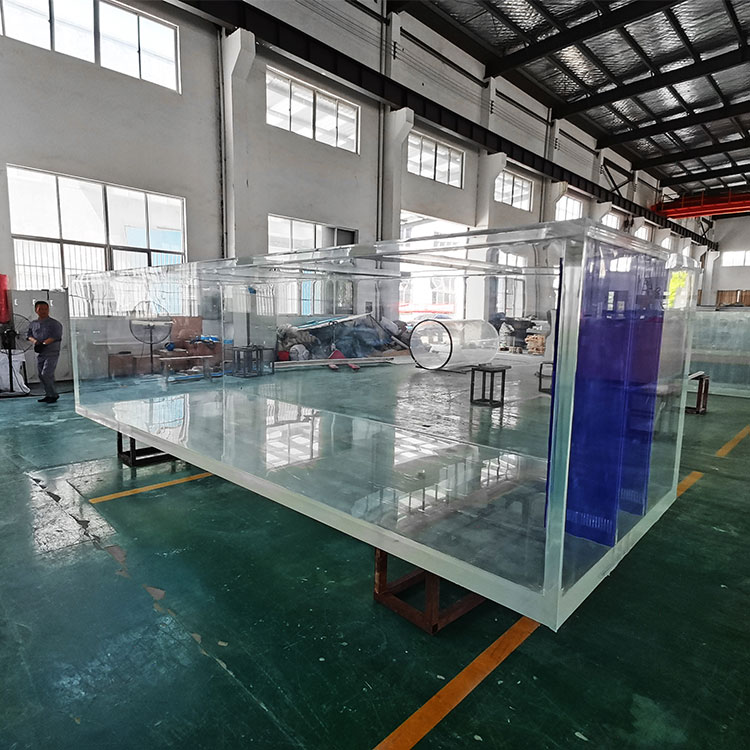
Custom acrylic fish tank

Custom acrylic fish tank
Custom acrylic fish tank
How Thick Should Acrylic Be for a Fish Tank?
There is no universal acrylic thickness that is suitable for every aquarium.
The required acrylic thickness depends on:
The deeper the aquarium, the greater the hydrostatic pressure acting on the acrylic panels.
For this reason, a small shallow aquarium and a large deep commercial fish tank cannot use the same thickness simply because both are made from acrylic.
For large custom acrylic aquariums, thickness should be evaluated as part of the complete engineering design.
If you are not sure what acrylic thickness your fish tank requires, send the aquarium dimensions and water depth to Leyu Acrylic Factory for professional evaluation.
Materials Needed to Build an Acrylic Fish Tank Aquarium
A basic acrylic aquarium project may require the following materials and equipment.
Clear Cast Acrylic Panels
The acrylic panels form the primary structure of the fish tank.
Panel dimensions and thickness should be determined according to the aquarium design.
Acrylic Bonding Materials
Acrylic panels are normally joined using specialized acrylic bonding materials and controlled bonding processes.
The correct bonding method depends on acrylic type, panel thickness, joint configuration and project requirements.
Cutting and Machining Equipment
Precision cutting equipment is recommended for professional acrylic aquarium manufacturing.
CNC machining can provide consistent panel dimensions and accurate edges.
Clamps and Positioning Tools
During bonding, the acrylic panels must remain accurately positioned.
Proper alignment is essential to achieving consistent joints.
Polishing Equipment
Visible acrylic edges and surfaces may require machining and polishing to achieve the required optical appearance.
Protective Packaging Materials
Acrylic surfaces should be protected during production, transportation and installation to minimize scratches and other surface damage.
How to Build an Acrylic Fish Tank Aquarium Step by Step
Determine the Aquarium Dimensions
Begin by defining the required aquarium dimensions.
Important information includes:
Length: overall aquarium length
Width: overall aquarium width
Water depth: maximum operating water depth
Shape: rectangular, curved, cylindrical, L-shaped or custom
Viewing area: front, side, multiple sides or panoramic
Application: residential, commercial, hotel, restaurant, aquarium or oceanarium
The installation environment should also be considered from the beginning.
For example, a large aquarium installed inside a building may need to pass through doors, elevators or other restricted access points.
Design the Acrylic Aquarium Structure
After determining the dimensions, create the structural design.
A typical rectangular acrylic fish tank may include:
Bottom panel
Front panel
Rear panel
Side panels
Top reinforcement
Bracing
Overflow area
Filtration compartment
Equipment openings
Maintenance access
For large projects, CAD drawings and 3D models can help coordinate manufacturing and installation.
The design should also consider how the aquarium will be transported and installed at the final site.
Select the Appropriate Acrylic Thickness
The acrylic thickness must be selected according to the complete structural configuration.
Simply choosing the thickest available acrylic is not necessarily the best approach.
An efficient design considers:
For commercial and large-scale aquariums, the thickness should be confirmed by experienced acrylic professionals and project engineers.
CNC Cutting and Machining
Once the design is approved, the acrylic panels can be precision cut.
Professional CNC fabrication helps achieve:
This is especially important for large acrylic aquariums where dimensional errors can become more significant during assembly.
Prepare the Bonding Surfaces
The acrylic edges that will be bonded must be properly prepared.
The surfaces should be clean, flat and accurately aligned.
Dust, contamination, uneven edges and poor preparation can negatively affect bonding quality.
For large aquarium projects, bonding is one of the most critical manufacturing stages because the joints must withstand continuous water pressure.
Bond the Acrylic Panels
The prepared panels are carefully positioned according to the assembly sequence.
Professional acrylic bonding requires controlled application of the bonding material and accurate panel positioning.
The process should be carried out by experienced fabricators, particularly for thick acrylic and large structural components.
A well-controlled bonding process can create strong and visually clean acrylic joints.
Allow Sufficient Curing Time
The bonded aquarium should remain undisturbed for the required curing period.
The curing process depends on:
Bonding material
Acrylic thickness
Joint design
Temperature
Humidity
Project conditions
The aquarium should not be filled with water immediately after bonding.
Adequate curing time is essential before structural testing.
Polish the Acrylic
After fabrication and bonding, visible edges and surfaces may be polished.
Professional polishing improves the appearance and transparency of the finished aquarium.
This is especially important for:
For a high-end acrylic aquarium, polishing is part of the manufacturing process rather than simply an optional cosmetic treatment.
Install Filtration and Aquarium Equipment
The aquarium may be integrated with:
Ideally, these requirements should be incorporated into the aquarium design before fabrication.
This reduces the need for modifications after the acrylic structure has been completed.
Perform a Water Test
Before fish or aquatic animals are introduced, the completed aquarium should undergo appropriate inspection and water testing.
The inspection may include:
For large commercial aquariums, the testing procedure should be determined according to the specific engineering requirements.
DIY Acrylic Aquarium vs. Professional Manufacturing
DIY Acrylic Fish Tank
DIY construction can be suitable for experienced hobbyists working on small and simple aquariums.
Typical applications include:
Small home fish tanks
Small breeding tanks
Hobby aquariums
Simple rectangular tanks
Small custom aquariums
However, DIY fabrication becomes more difficult as the tank becomes larger and deeper.
Professional Acrylic Aquarium
Professional manufacturing is recommended for:
Large acrylic fish tanks
Commercial aquariums
Public aquariums
Oceanariums
Aquarium restaurants
Hotel aquariums
Shopping mall aquariums
Cylindrical acrylic tanks
Underwater tunnels
Large viewing windows
Curved acrylic structures
Special-shaped aquatic projects
The larger the aquarium, the greater the consequences of incorrect material selection, insufficient thickness, poor bonding or inaccurate fabrication.
Common Mistakes When Building an Acrylic Aquarium
Using the Wrong Acrylic
Do not select acrylic simply according to the lowest price.
For structural aquarium applications, material quality, thickness, optical properties and fabrication compatibility are important.
Choosing Acrylic Thickness Without Considering Water Depth
Acrylic thickness should be related to the actual water depth and structural configuration.
Poor Panel Alignment
Misaligned panels can create uneven joints and affect the appearance and structural performance of the aquarium.
Improper Bonding
Poor bonding preparation or uncontrolled bonding can result in weak or visually defective joints.
Filling the Aquarium Too Early
Acrylic bonding requires sufficient curing time before water testing.
Ignoring Transportation and Installation
A large acrylic aquarium may be successfully manufactured in a factory but still face installation problems if the transportation route, lifting equipment or building access has not been considered.
Scratching the Acrylic During Cleaning
Acrylic is durable but can be scratched by inappropriate cleaning tools.
Always use acrylic-safe cleaning equipment.
Acrylic Aquarium Maintenance
Proper maintenance helps preserve the transparency and appearance of an acrylic fish tank aquarium.
Use cleaning equipment specifically designed for acrylic surfaces.
Avoid:
Light scratches may be repairable through professional acrylic polishing.
Commercial aquariums should also be periodically inspected for:
Surface damage
Bonding seams
Water leakage
Structural movement
Support conditions
Filtration performance
Overflow and drainage
Equipment operation
Acrylic Aquarium vs. Glass Aquarium
| Feature | Acrylic Aquarium | Glass Aquarium |
| Weight | Lower | Higher |
| Impact resistance | High | Lower |
| Custom shapes | Excellent | More limited |
| Large panels | Excellent for many applications | More challenging |
| Curved fabrication | Highly suitable | More difficult |
| Scratch resistance | Lower | Higher |
| Repairability | Can often be polished | Scratches are harder to repair |
| Fabrication | CNC machining, bonding, thermoforming | Glass cutting and structural glazing |
| Large aquatic structures | Highly suitable | Suitable for selected designs |
| Customization | Excellent | Good |
The right material depends on the project.
For large customized aquatic structures, acrylic provides significant design and fabrication advantages.
How Much Does It Cost to Build an Acrylic Fish Tank?
The cost of an acrylic fish tank depends on the complete project specification rather than simply the tank's length.
Major cost factors include:
Acrylic thickness
Acrylic grade
Total acrylic area
Tank dimensions
Water depth
Shape
CNC machining
Bonding
Polishing
Reinforcement
Filtration integration
Packaging
Transportation
Installation
Engineering requirements
Site conditions
A small DIY aquarium may mainly require acrylic sheets, bonding materials and basic tools.
A large custom acrylic aquarium can involve engineering, thick acrylic panels, CNC machining, professional bonding, polishing, special packaging, transportation, lifting and on-site installation.
Therefore, the best way to obtain an accurate quotation is to provide the aquarium dimensions and project requirements to a professional manufacturer.
Large Custom Acrylic Fish Tank Manufacturing
For large acrylic fish tanks, manufacturing capability becomes especially important.
Leyu Acrylic Factory has experience in customized acrylic aquatic engineering projects, including large acrylic fish tanks, aquarium viewing windows, underwater tunnels, cylindrical aquariums, oceanarium projects and acrylic pool structures.
Our manufacturing capabilities include:
Thick Cast Acrylic Panels
Leyu provides thick cast acrylic solutions for large aquatic structures.
Depending on the project, acrylic thicknesses can range from approximately 30 mm to 1000 mm.
The actual thickness should be determined according to the specific structural requirements.
Large Acrylic Panel Fabrication
For seamless bonding applications, Leyu can manufacture and process large acrylic panels, with seamless bonding capabilities reaching approximately 10 m × 3 m depending on the project configuration.
CNC Machining
Precision machining helps achieve accurate dimensions and consistent component quality.
Acrylic Bonding
Professional acrylic bonding is used to create structurally reliable and visually clean joints.
Manual and Professional Polishing
Large acrylic viewing panels require careful surface treatment to achieve excellent optical appearance.
Leyu's technical team combines mechanical processing and professional polishing techniques for large acrylic components.
Thermoforming
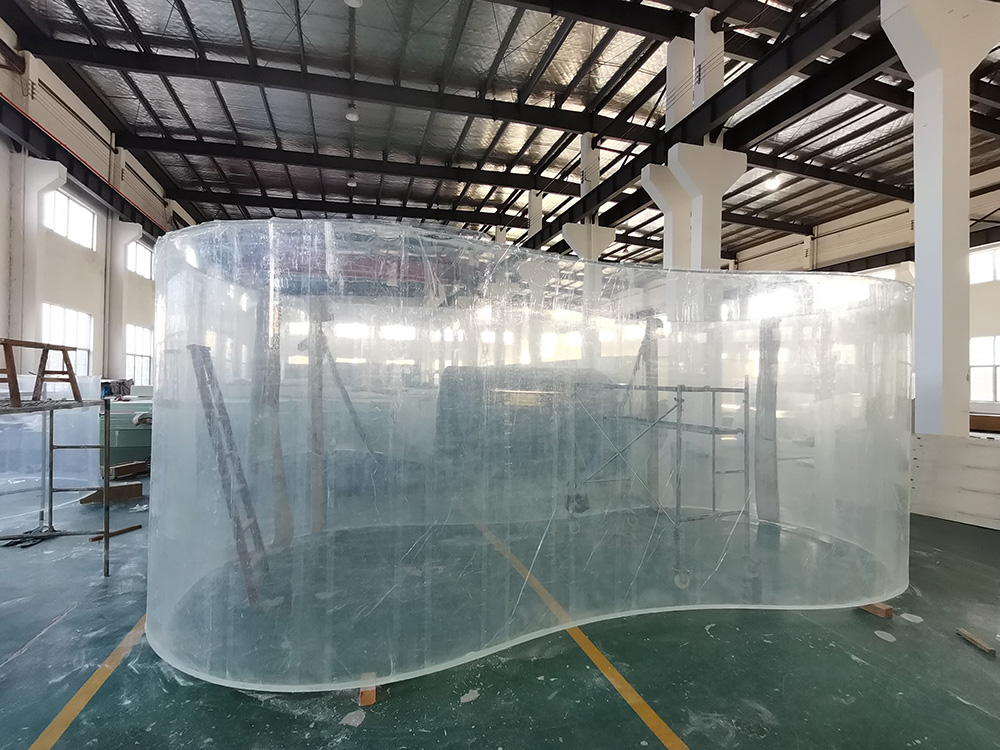
Acrylic can be thermoformed into curved and customized shapes for cylindrical tanks, curved viewing windows, domes and other special structures.
Installation Guidance
Large acrylic projects require careful transportation, lifting, positioning and installation.
Leyu can provide professional technical guidance according to project requirements.
Acrylic Aquarium Applications
Residential Fish Tanks
Custom acrylic fish tanks can be designed around the dimensions and style of a home, villa or private residence.
Hotel Aquariums
Hotels can use large acrylic aquariums as architectural focal points in lobbies, restaurants, reception areas and entertainment spaces.
Aquarium Restaurants
Large acrylic viewing windows and aquarium walls can create immersive dining environments.
Public Aquariums
Acrylic is widely suited to large viewing windows, underwater tunnels and specialized aquatic displays.
Oceanariums
Large acrylic panels provide visitors with wide viewing areas for marine animals and underwater environments.
Commercial Aquatic Displays
Shopping malls, resorts, entertainment centers and other commercial facilities can use customized acrylic aquariums to create memorable visual attractions.
Why Choose Leyu Acrylic Factory?
Leyu Acrylic Factory focuses on customized acrylic aquatic engineering rather than standard acrylic sheet sales.
Our capabilities cover the major stages of an acrylic aquatic project:
Material → Design Coordination → CNC Fabrication → Bonding → Polishing → Inspection → Packaging → Transportation Support → Installation Guidance
Our acrylic solutions are suitable for:
Acrylic aquariums
Large acrylic fish tanks
Custom fish tanks
Aquarium viewing windows
Oceanarium windows
Acrylic underwater tunnels
Cylindrical acrylic tanks
Acrylic pool windows
Infinity pool viewing panels
Special-shaped acrylic structures
Leyu Acrylic Factory was established in 1996 and has developed extensive experience in acrylic aquatic engineering and customized fabrication.
Our production capabilities include thick cast acrylic panels, large-format acrylic structures, thermoforming, seamless bonding and professional polishing.
For demanding aquatic projects, our goal is not simply to supply acrylic panels. We aim to provide a complete and reliable acrylic engineering solution from manufacturing to installation support.
What Information Should You Send to an Acrylic Aquarium Manufacturer?
To help an acrylic aquarium manufacturer evaluate your project, prepare as much of the following information as possible:
Aquarium Length
Aquarium Width
Water Depth
Overall Height
Aquarium Shape
Required Viewing Area
Freshwater or Saltwater
Residential or Commercial Application
Installation Location
Required Filtration System
Project Drawings
3D Model or CAD Drawing
Installation Requirements
Even a simple sketch with the required dimensions can help the manufacturer understand the project.
If you are still at the concept stage, Leyu Acrylic Factory can also evaluate your basic dimensions and application requirements before final fabrication.
FAQ: How to Build an Acrylic Fish Tank Aquarium
Can you build a fish tank from acrylic?
Yes. Acrylic is widely used to manufacture fish tanks and custom aquariums. It is transparent, lightweight, impact resistant and highly customizable.
Is acrylic good for a fish tank?
Yes. Acrylic is particularly suitable for custom and large aquariums because it can be fabricated into large, curved and complex transparent structures.
What acrylic is best for an aquarium?
Clear cast acrylic is generally preferred for demanding structural aquarium applications.
How thick should acrylic be for an aquarium?
There is no universal thickness. It depends on tank dimensions, water depth, panel size, reinforcement, support and structural design.
Can I build an acrylic aquarium myself?
Small acrylic aquariums can be suitable for experienced DIY builders. Large or deep aquariums should be professionally designed and manufactured.
Is acrylic stronger than glass?
Acrylic has significantly higher impact resistance than conventional glass, but the structural performance of an aquarium depends on the complete design, thickness, support and fabrication quality.
Does acrylic aquarium scratch easily?
Acrylic is more susceptible to surface scratches than glass. However, many light scratches can be professionally polished.
Can acrylic be used for saltwater aquariums?
Yes. Properly selected acrylic can be used for both freshwater and saltwater aquarium applications.
Can you make a cylindrical acrylic aquarium?
Yes. Acrylic can be thermoformed and fabricated into cylindrical and other curved aquarium structures.
Can you manufacture a large acrylic fish tank?
Yes. Leyu Acrylic Factory specializes in customized large acrylic aquatic structures, including large fish tanks, viewing windows, cylindrical aquariums and oceanarium projects.
Can acrylic aquarium panels be bonded together?
Yes. Acrylic panels can be joined using specialized acrylic bonding processes. Large structural joints should be fabricated by experienced professionals.
How do you clean an acrylic fish tank?
Use acrylic-safe cleaning tools and avoid metal blades, abrasive pads and contaminated cleaning materials.
Can scratches on an acrylic aquarium be repaired?
Light scratches can often be removed or reduced through professional acrylic polishing. Deeper damage should be evaluated by an acrylic specialist.
How long does an acrylic aquarium last?
Service life depends on acrylic quality, design, installation, environmental exposure, maintenance and operating conditions. Properly designed and maintained acrylic structures can provide long-term service.
How do I order a custom acrylic fish tank?
Send Leyu Acrylic Factory your required dimensions, water depth, shape, application and drawings if available. Our team can evaluate the project and provide a customized solution.
Related search
How to build an acrylic aquarium
How to make an acrylic fish tank
How to build a custom acrylic aquarium
DIY acrylic fish tank
Acrylic fish tank manufacturer
Acrylic aquarium manufacturer
Acrylic aquarium supplier
Custom acrylic aquarium
Custom acrylic fish tank
Large acrylic fish tank
Large acrylic aquarium
Cast acrylic aquarium
Acrylic aquarium panels
Acrylic aquarium fabrication
Acrylic aquarium thickness
Acrylic fish tank thickness
Acrylic aquarium design
 العربية
 Русский
 Español
 Português
 English
 Français
 Deutsch
 italiano
 한국어
한국어 Nederlands
 Tiếng Việt
 ไทย
ไทย Polski
 Türkçe
 አማርኛ
አማርኛ ភាសាខ្មែរ
 Bahasa Melayu
 தமிழ்
தமிழ் Filipino
 Bahasa Indonesia
 magyar
 Română
 Čeština
 Српски
 हिन्दी
 فارسی
فارسی Kiswahili
 Slovenčina
 Slovenščina
 Norsk
Norsk Svenska
 Ελληνικά
 Suomi
Suomi עברית
עברית Dansk
Dansk Shqip
Shqip বাংলা
বাংলা Hrvatski
 Afrikaans
 Māori
Māori සිංහල
සිංහල Беларуская мова
 Bosanski
 ދިވެހި
 Esperanto
 guarani
 Hausa
Hausa ʻŌlelo Hawaiʻi
 Kurdî
Kurdî Lietuvių
 Македонски
 ਪੰਜਾਬੀ
 Runasimi
 Türkmençe
 isiZulu