When you walk into an oceanarium, shopping mall, resort, theme park, or tourist attraction, a large fish tank is often one of the first things that catches your attention.
A huge cylindrical aquarium filled with colorful fish. A massive underwater viewing window. A long acrylic aquarium tunnel that allows visitors to walk beneath the water. These large aquarium installations can become the visual centerpiece of an entire public space.
But have you ever wondered how a large acrylic fish tank is actually made?
What material can withstand the pressure of thousands of liters of water? How is an extra-large acrylic aquarium manufactured? How are large acrylic panels transported, bonded, polished, and installed on site? And more importantly, how can you choose a reliable large acrylic fish tank manufacturer for your project?
This guide explains the key steps behind large acrylic aquarium engineering, from material selection and manufacturing to installation and supplier evaluation.
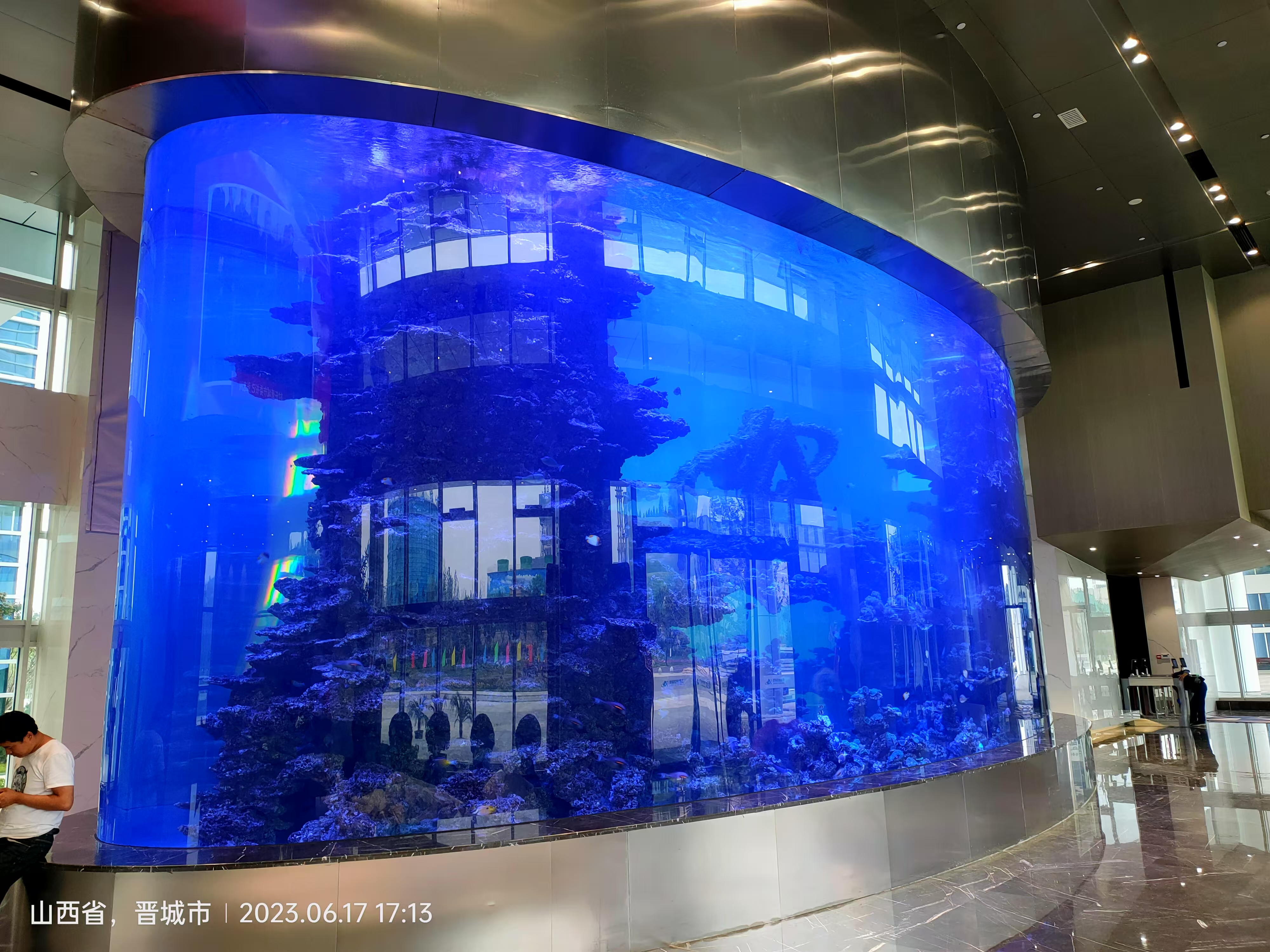
What Is a Large Acrylic Fish Tank?
A large acrylic fish tank is a custom-designed aquarium manufactured using high-performance cast acrylic, also known as PMMA (polymethyl methacrylate).
Unlike ordinary household aquariums, large acrylic aquariums are engineered according to specific requirements such as water depth, tank dimensions, structural configuration, viewing area, installation conditions, and intended use.
Large acrylic fish tanks are commonly found in:
Public aquariums and oceanariums
Shopping malls and commercial centers
Hotels and resorts
Theme parks and tourist attractions
Restaurants and entertainment venues
Service areas and transportation hubs
Private luxury residences
Educational and marine-life facilities
Depending on the project design, an extra large acrylic fish tank can include flat viewing panels, curved windows, cylindrical tanks, acrylic tunnels, underwater viewing walls, dome windows, and other customized structures.
For large-scale projects, acrylic is not simply selected because it is transparent. The material, thickness, geometry, bonding method, supporting structure, transportation, and installation process all need to work together as an engineered system.
Why Is Acrylic Used for Large Aquarium Tanks?
One of the most common questions from aquarium project owners is: Why use acrylic instead of glass for a large fish tank?
Glass remains an important aquarium material, but when projects become extremely large, thick, curved, or highly customized, acrylic offers several characteristics that can be advantageous.
Large and Extra-Thick Acrylic Panels
Large aquarium projects often require thick acrylic panels designed according to water depth and structural requirements.
Acrylic can be manufactured into large, thick cast sheets that are suitable for demanding aquarium applications. This gives designers greater flexibility when creating oversized viewing windows, curved aquarium walls, cylindrical tanks, and underwater tunnels.
High Optical Clarity
For a large aquarium, visual quality is critical.
High-quality acrylic provides excellent transparency and can deliver a clear viewing experience when properly manufactured, machined, bonded, and polished.
This is particularly important for public aquariums where visitors need to clearly see marine animals, fish, coral, lighting effects, and underwater landscapes.
Lower Weight and Better Impact Resistance
Acrylic is significantly lighter than glass of comparable dimensions and thickness, while also offering good impact resistance.
For large aquarium projects, reducing material weight can simplify transportation, lifting, handling, and installation planning.
Flexible Design Possibilities
Acrylic can be machined, thermoformed, polished, and bonded into different configurations.
This makes it possible to create customized:
This design flexibility is one of the reasons acrylic is widely considered for complex large aquarium engineering projects.
How Is a Large Acrylic Fish Tank Manufactured?
A large acrylic fish tank is not produced by simply cutting a piece of acrylic and filling it with water.
A professional large aquarium project usually involves several interconnected stages.
Structural Design Comes First
Before manufacturing begins, the aquarium structure must be evaluated according to the actual project conditions.
Important factors include:
Water pressure increases with water depth, so the structural requirements of a deep aquarium are very different from those of a small decorative fish tank.
For this reason, acrylic thickness should not be selected simply by comparing it with another project. A professional engineering assessment is required for each specific application.
Acrylic Sheet Manufacturing
The quality of the acrylic sheet directly affects the final performance and appearance of the aquarium.
For large aquarium applications, manufacturers need to control important factors such as material purity, thickness consistency, internal quality, optical clarity, and dimensional accuracy.
High-quality cast acrylic is commonly preferred for large custom aquarium applications because it provides the material characteristics required for machining, bonding, polishing, and forming.
Precision Cutting and Machining
After the acrylic sheet is manufactured, it needs to be processed according to the project drawings.
Depending on the design, machining may include:
Precision cutting
Edge milling
Drilling
Grooving
Edge preparation
Surface machining
Dimensional inspection
For an extra large acrylic fish tank, even small dimensional deviations can affect panel alignment and subsequent installation.
Acrylic Bonding
Bonding is one of the most important processes in large acrylic aquarium manufacturing.
Large acrylic aquariums may consist of multiple panels that need to be joined together to create a larger structure.
The bonding process requires careful control of:
Joint preparation
Alignment
Bonding materials
Curing conditions
Joint appearance
Surface finishing
For high-end aquarium projects, the goal is often to achieve a clean and visually integrated connection so that the viewing area maintains a high level of optical quality.
Polishing and Optical Finishing
After machining and bonding, acrylic surfaces and edges may require extensive polishing.
For large aquarium panels, polishing is not simply a cosmetic step.
The quality of surface finishing directly affects the appearance of the viewing window. Professional polishing can help restore clarity and create a smooth, clean optical surface.
This is particularly important for large viewing panels, cylindrical aquariums, and aquarium tunnels where visitors view the acrylic from many different angles.
How Are Large Acrylic Aquariums Installed?
Manufacturing a large acrylic fish tank is only part of the project.
Transportation and installation can be equally challenging.
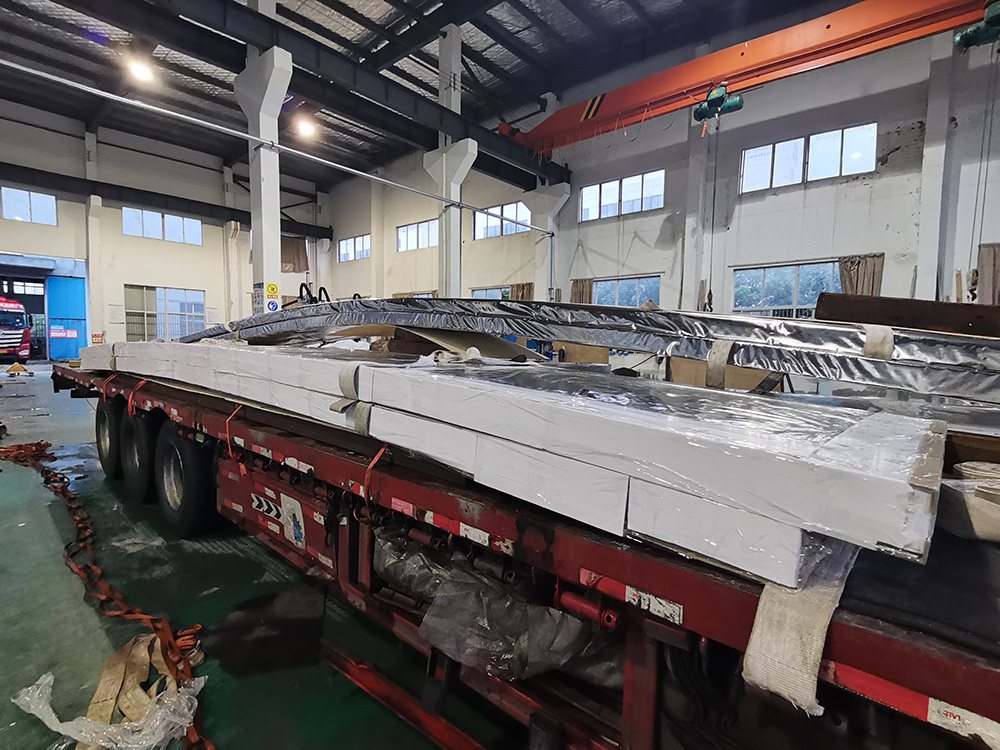
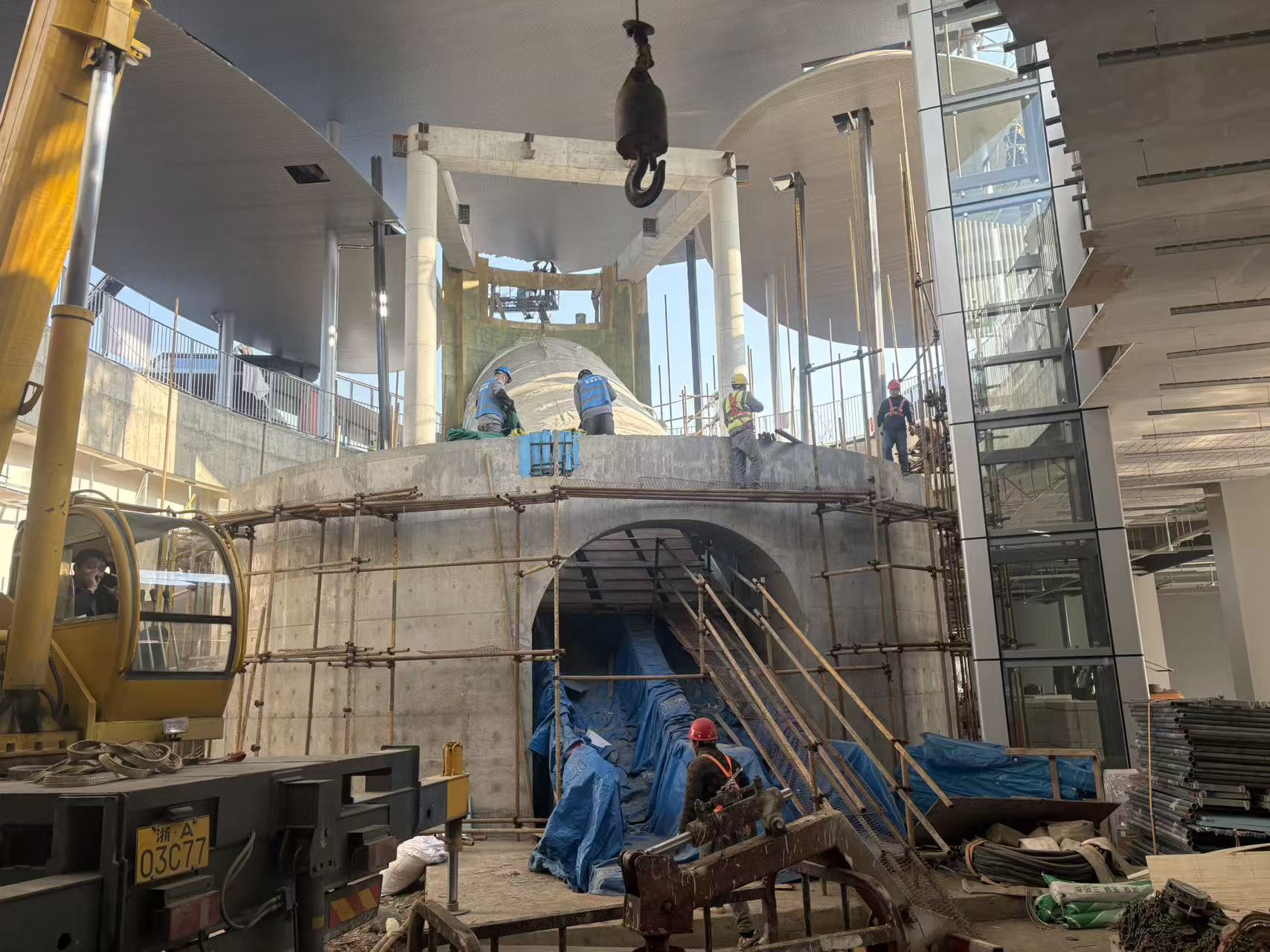
Large acrylic panels and finished aquarium structures may be oversized and require specialized packaging, lifting equipment, transportation planning, and on-site installation.
A typical installation process may involve:
Factory inspection → Protective packaging → Transportation → Site preparation → Lifting and positioning → Panel alignment → Bonding or assembly → Structural integration → Curing → Testing → Water filling and commissioning
Every project is different.
For example, installing a large flat acrylic viewing window requires different methods from installing a cylindrical acrylic fish tank or a long aquarium tunnel.
The site conditions, available lifting equipment, access routes, structural openings, installation sequence, and local construction conditions all need to be considered before delivery.
Large Cylindrical Fish Tanks, Aquarium Windows and Tunnels
Large acrylic aquariums come in many forms.
Large Cylindrical Acrylic Fish Tanks
Large cylindrical fish tanks are often used as architectural focal points in malls, hotels, restaurants, attractions, and public spaces.
Their curved geometry creates a 360-degree viewing experience but also creates additional requirements for forming, bonding, polishing, transportation, and installation.
Large Acrylic Aquarium Viewing Windows
Large underwater viewing windows are widely used in oceanariums and public aquariums.
The viewing panel may need to be extremely large and thick while maintaining high optical clarity.
The structural opening, supporting frame, water depth, panel dimensions, and installation method must be considered together.
Acrylic Aquarium Tunnels
An acrylic aquarium tunnel allows visitors to walk through or underneath an underwater environment.
Compared with a standard aquarium window, an aquarium tunnel involves more complex geometry, longer structures, multiple connections, and stricter installation requirements.
This is why choosing an experienced acrylic aquarium manufacturer is important for large-scale tunnel projects.
How to Choose a Large Acrylic Fish Tank Manufacturer
If you are planning a large aquarium for an oceanarium, hotel, shopping mall, resort, restaurant, theme park, or tourist attraction, the supplier you choose can significantly affect the project process.
Instead of looking only at the quotation, consider four key areas.
Acrylic Manufacturing Capability
Can the manufacturer produce large and extra-thick acrylic panels?
Ask about:
Maximum panel dimensions
Available thicknesses
Raw material
Optical clarity
Thickness consistency
Machining capability
Polishing capability
Engineering and Structural Experience
A supplier should understand that a large aquarium is an engineered structure rather than simply a decorative product.
Ask whether the manufacturer has experience with water pressure analysis, acrylic thickness selection, supporting structures, panel deflection, bonding design, and project-specific engineering coordination.
Installation Capability
Large acrylic panels can be difficult to transport, lift, align, bond, and install.
A manufacturer with practical installation experience can help reduce communication gaps between production and construction teams.
Verified Project Experience
Ask to see actual factory production, completed projects, installation photographs, videos, and project references.
A reliable large acrylic fish tank manufacturer should be able to demonstrate its production capability rather than relying only on product renderings.
Why Choose Leyu Acrylic for Large Aquarium Projects?
Zhangjiagang City Leyu Plexiglass Product Factory, also known as LEYU ACRYLIC, has specialized in acrylic manufacturing and large aquatic engineering applications since 1996.
As an acrylic factory, Leyu provides integrated capabilities covering acrylic sheet production, machining, thermoforming, bonding, polishing, project coordination, and installation guidance.
Leyu's product and engineering experience includes:
Large acrylic fish tanks
Extra large acrylic aquariums
Large cylindrical fish tanks
Acrylic aquarium viewing windows
Aquarium tunnels
Curved acrylic panels
Acrylic pool viewing windows
Oceanarium projects
Hotel and resort aquatic projects
Commercial aquarium installations
For large custom projects, Leyu can provide project-specific solutions according to the required dimensions, water depth, structural configuration, site conditions, and installation requirements.
The company has supplied large acrylic structures for projects involving public attractions, commercial spaces, oceanariums, service areas, hotels, and other aquatic environments.
A large aquarium should never be designed only around appearance. The final solution needs to balance optical quality, material performance, structural requirements, manufacturing precision, transportation, installation, and long-term operation.
That is why choosing an experienced large acrylic fish tank manufacturer can make a significant difference.
What Information Should You Send to an Acrylic Aquarium Manufacturer?
If you are looking for a quotation for a custom large acrylic fish tank, providing the following information can help the manufacturer evaluate your project more efficiently:
Aquarium length, width, and height
Water depth
Acrylic viewing area
Required tank shape
Flat, curved, cylindrical, tunnel, or custom design
Installation location
Supporting structure information
Architectural drawings or CAD drawings
Project country
Required delivery schedule
Installation requirements
If drawings are not yet available, basic dimensions, sketches, site photographs, and project requirements can still be useful for an initial discussion.
The final acrylic thickness, structure, bonding configuration, and installation method should be determined according to the actual engineering requirements rather than a generic thickness recommendation.
Large Acrylic Fish Tank FAQ
What material is used for large fish tanks?
Large custom fish tanks commonly use cast acrylic (PMMA) for large transparent viewing structures. The required material grade and thickness depend on the project design and engineering requirements.
Is acrylic stronger than glass for a large aquarium?
Acrylic and glass have different mechanical and optical properties. For large, thick, curved, or highly customized aquarium structures, acrylic can provide advantages in weight, impact resistance, fabrication flexibility, and large-panel applications.
How thick should acrylic be for a large fish tank?
There is no universal thickness for every large acrylic fish tank. Thickness depends on water depth, panel dimensions, support conditions, geometry, and structural design. A project-specific engineering calculation is recommended.
Can acrylic be used for an aquarium tunnel?
Yes. Acrylic is widely used for custom aquarium tunnels because it can be fabricated into large curved structures and provides high optical clarity.
Can you manufacture a custom cylindrical acrylic fish tank?
Yes. Large cylindrical acrylic fish tanks can be customized according to the required diameter, height, viewing configuration, structural design, and installation conditions.
 العربية
 Русский
 Español
 Português
 English
 Français
 Deutsch
 italiano
 한국어
한국어 Nederlands
 Tiếng Việt
 ไทย
ไทย Polski
 Türkçe
 አማርኛ
አማርኛ ភាសាខ្មែរ
 Bahasa Melayu
 தமிழ்
தமிழ் Filipino
 Bahasa Indonesia
 magyar
 Română
 Čeština
 Српски
 हिन्दी
 فارسی
فارسی Kiswahili
 Slovenčina
 Slovenščina
 Norsk
Norsk Svenska
 Ελληνικά
 Suomi
Suomi עברית
עברית Dansk
Dansk Shqip
Shqip বাংলা
বাংলা Hrvatski
 Afrikaans
 Māori
Māori සිංහල
සිංහල Беларуская мова
 Bosanski
 ދިވެހި
 Esperanto
 guarani
 Hausa
Hausa ʻŌlelo Hawaiʻi
 Kurdî
Kurdî Lietuvių
 Македонски
 ਪੰਜਾਬੀ
 Runasimi
 Türkmençe
 isiZulu