How Acrylic Thick Sheets Enable Aquarium Underwater Tunnel Construction
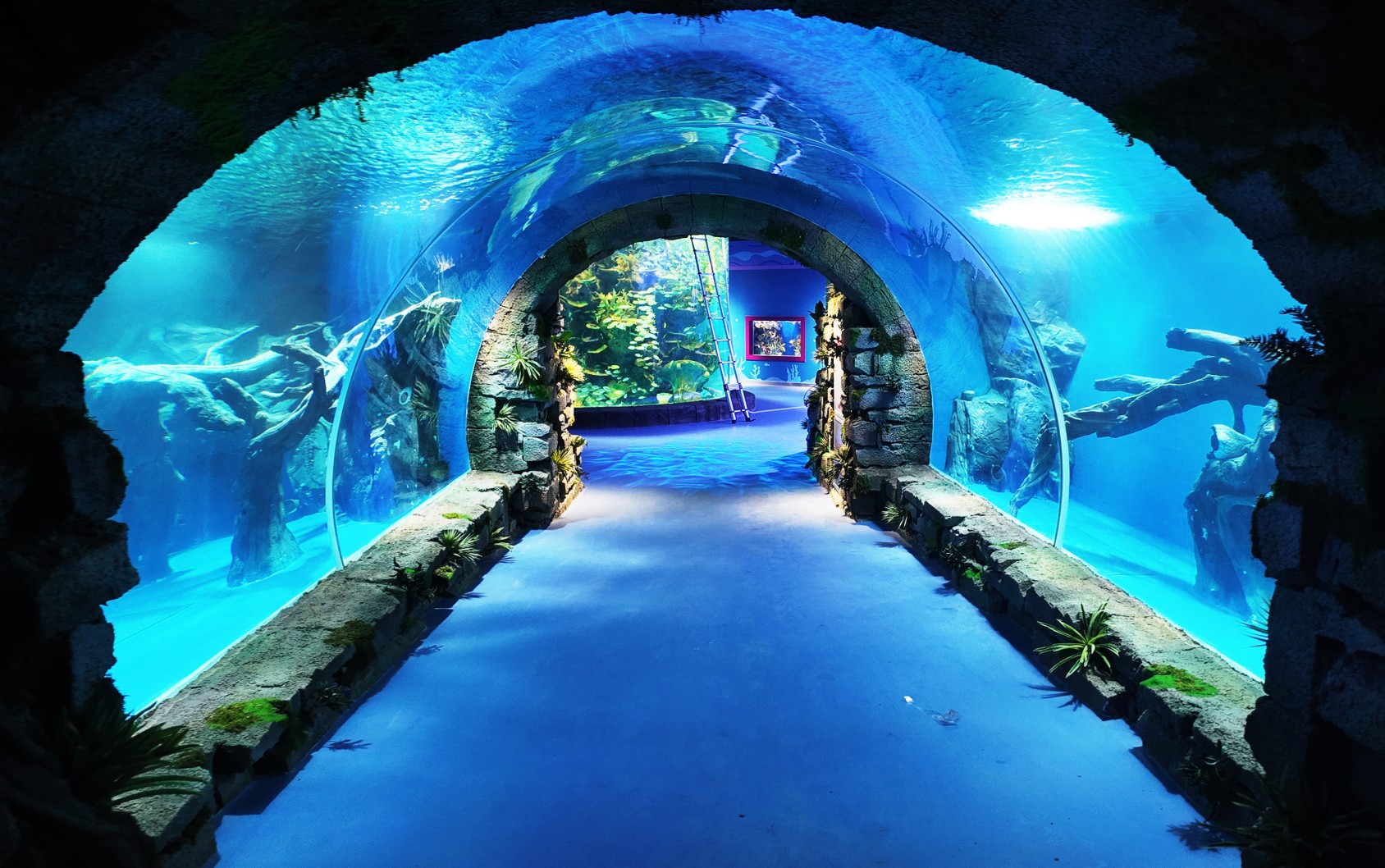
Acrylic underwater tunnels have become a signature feature of modern aquariums and theme parks. Visitors walk through transparent corridors while sharks, rays, and schools of fish glide overhead, creating an immersive deep-sea experience.
Behind this spectacle lies sophisticated engineering centered on high-quality acrylic thick sheets. These specialized panels form the structural and optical foundation of every successful tunnel project.
This article provides a complete overview of the construction process, explains why acrylic thick sheets outperform alternative materials, and details the practical steps from factory production to final installation and long-term maintenance.
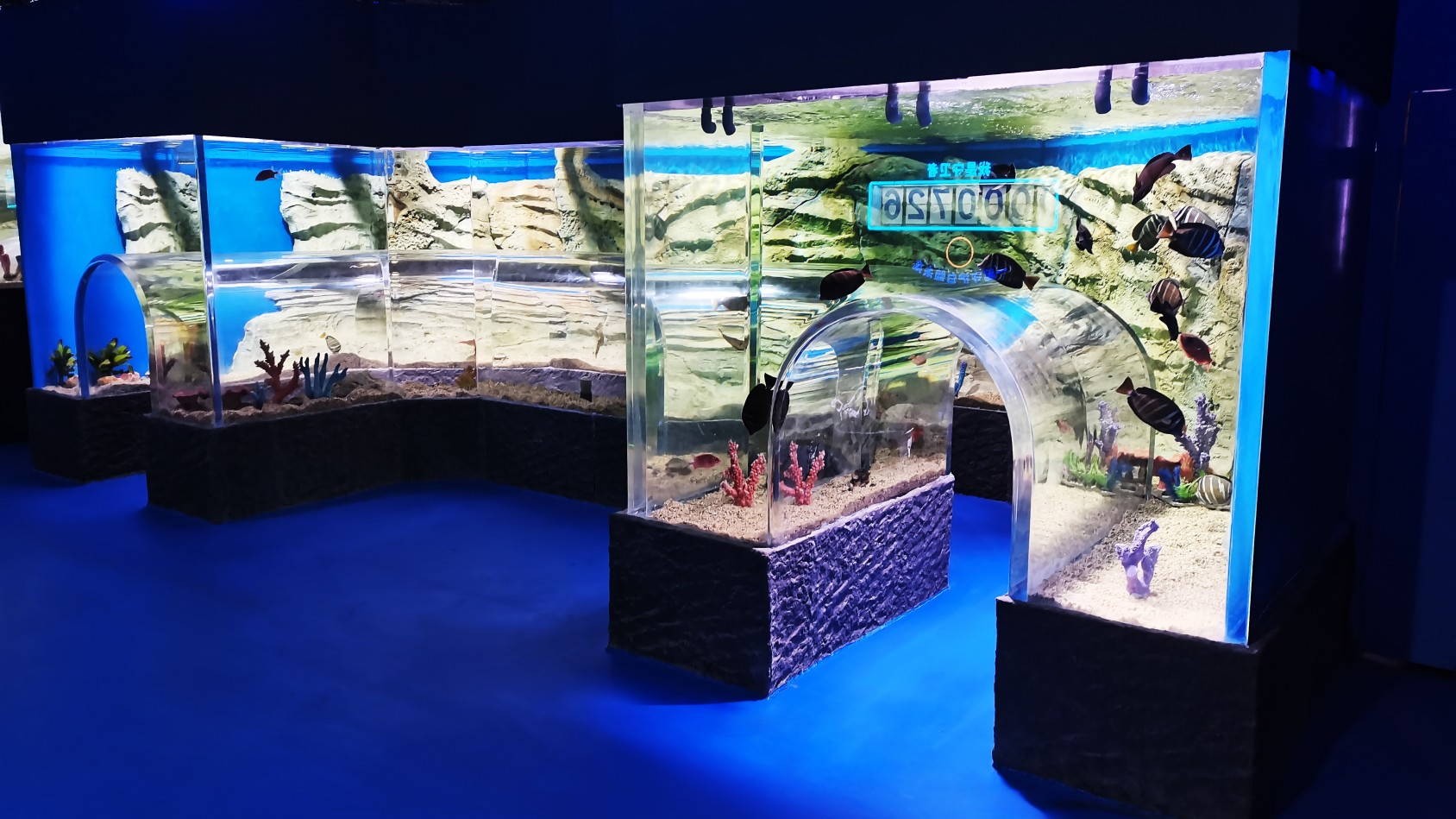
Why Acrylic Thick Sheets Dominate Underwater Tunnel Projects
Glass was once the default transparent material for aquariums, yet it has been largely replaced in large-scale tunnels. Acrylic thick sheets offer decisive advantages. At equal thickness they weigh approximately half as much as glass, significantly reducing structural loads on supporting steel and concrete.
Their impact resistance far exceeds that of tempered glass, eliminating the risk of spontaneous breakage. Optical clarity reaches up to 92% light transmission with virtually no green tint, delivering true-to-life underwater views. Most importantly, acrylic thick sheets can be thermoformed into large-radius curves and complex geometries that glass cannot achieve economically or safely at the required thicknesses.
These properties make acrylic thick sheets the material of choice for tunnels that must withstand substantial hydrostatic pressure while providing panoramic, distortion-free sightlines. Projects involving large water volumes, high pressure, and irregular shapes rely on precisely engineered acrylic thick sheets to meet both safety standards and visitor expectations.
From Raw Material to Finished Thick Sheet
High-performance tunnel panels begin as cast acrylic thick sheets. Unlike extruded sheet, cast material is produced by polymerizing methyl methacrylate monomer between glass plates.
This process yields superior optical quality, lower internal stress, and the ability to reach thicknesses from 50 mm to more than 300 mm. Thickness is calculated according to water depth, tunnel span, and required safety factors. Greater depth demands greater thickness to keep deflection within acceptable limits and maintain an adequate safety margin.
After casting, the sheets undergo controlled annealing to relieve residual stress. Surfaces are then precision-polished to optical standards. Only panels that pass strict inspections for flatness, thickness tolerance, and clarity proceed to forming and fabrication. LEYU specializes in producing these engineering-grade acrylic thick sheets and can supply custom sizes and thicknesses matched to specific project calculations.
Thermoforming: Creating the Curved Tunnel Geometry
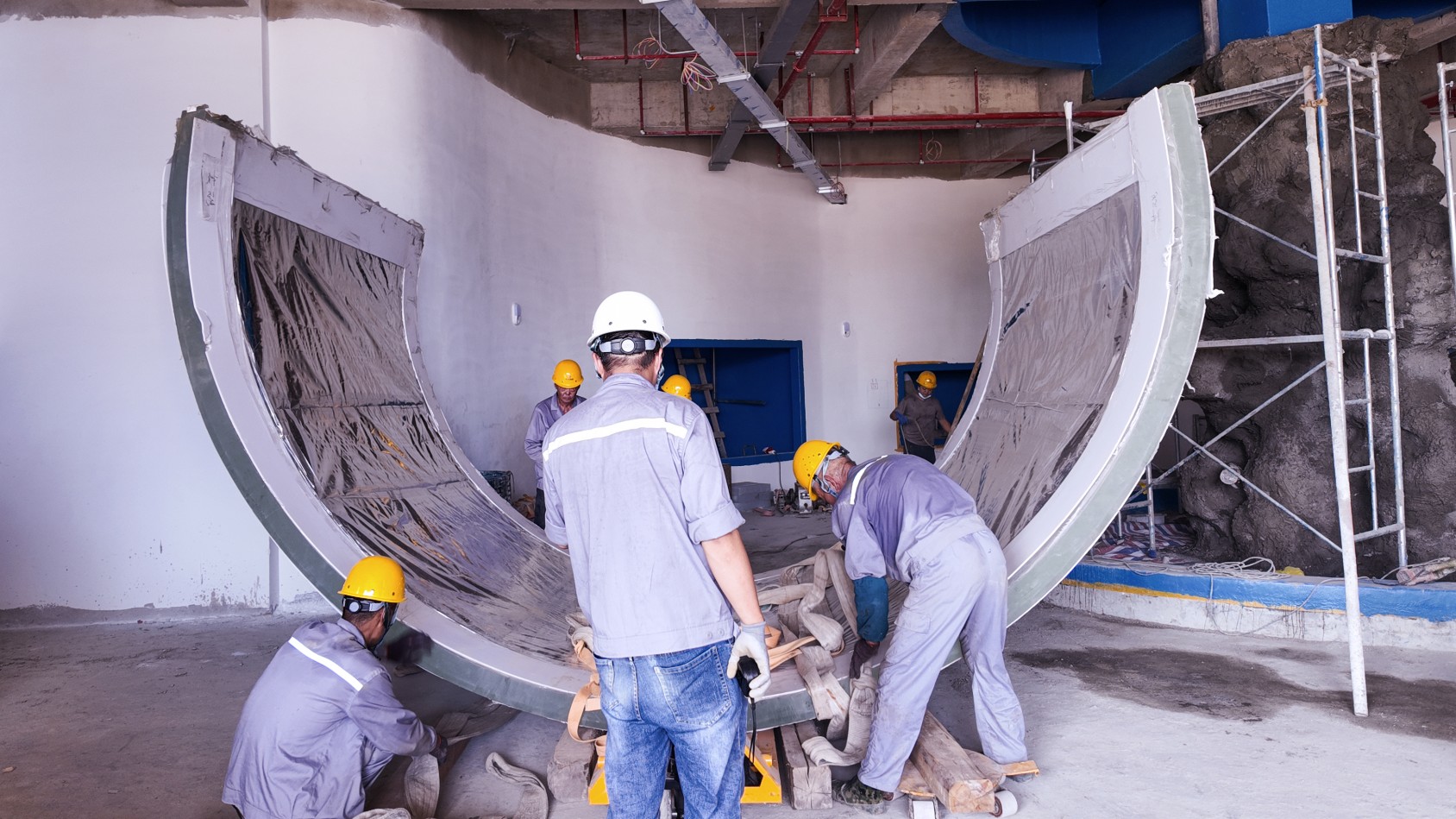
Most underwater tunnels use arched or cylindrical sections rather than flat walls. Flat panels would create optical distortion and concentrate stress at the edges. The solution is controlled thermoforming of acrylic thick sheets.
Large sheets are placed in industrial ovens and heated uniformly until the material softens. They are then draped or pressed over custom steel molds that define the exact radius and profile of the tunnel arch. Cooling follows a carefully programmed curve to minimize residual stress.
Improper temperature control can leave internal stresses that later appear as cracking or optical distortion under load. Because the process is time-consuming and requires specialized equipment, it is performed exclusively in the factory under controlled conditions.
Once formed, each curved section is inspected for dimensional accuracy and surface quality. Edges are machined square and true so that subsequent bonding produces uniform joint lines.
Seamless Bonding and Structural Integration
A complete tunnel is rarely a single continuous piece. Length and transportation constraints require multiple prefabricated arch segments. These segments are joined using specialized aquarium-grade adhesives that create chemically welded joints nearly as strong as the parent material. When executed correctly, the bond line is optically almost invisible, preserving the continuous “window-to-the-sea” effect.
Bonding is only one part of the structural system. Acrylic thick sheets work together with steel frames and concrete foundations. Engineers perform finite-element analysis to verify that the combined system can resist water pressure, buoyancy (when the tunnel is empty), and differential settlement. Anti-flotation anchors and flexible seals accommodate minor movement without compromising watertightness.
Packaging, Shipping, and On-Site Installation by LEYU
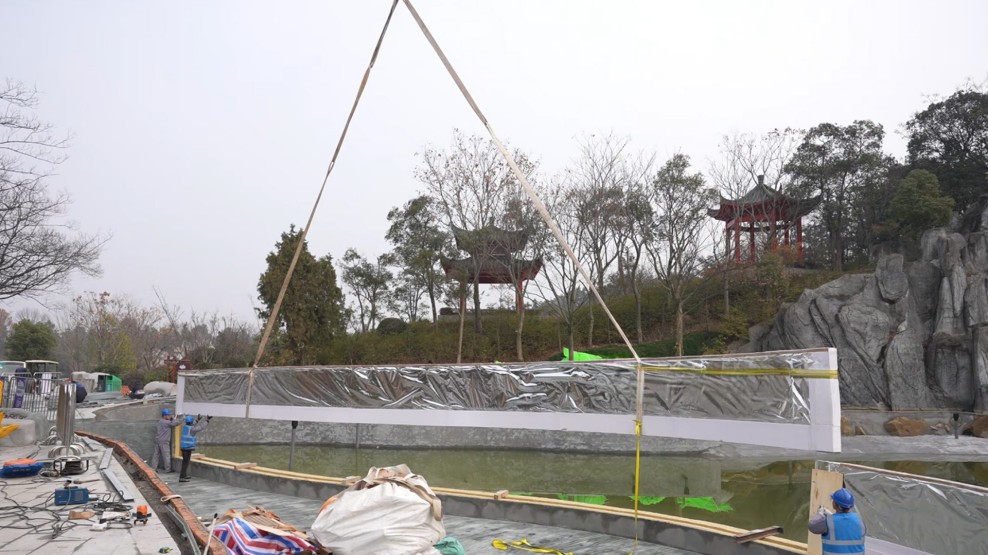
Protecting large, high-value acrylic thick sheets during transport is critical. Before dispatch, LEYU wraps every panel in protective PE film to prevent surface scratches. Additional cushioning layers of KT board are applied, after which the panels are secured inside custom wooden crates.
When extra rigidity is required, reinforced iron frames are used. The choice between wooden crates and iron frames depends on panel size, shipping distance, and handling conditions at the destination. Clear labeling and handling instructions accompany every shipment.
On site, LEYU’s technical team manages precise lifting and positioning. Because acrylic surfaces are easily scratched, specialized soft slings and temporary protective coverings remain in place until final alignment.
Segments are lowered into prepared concrete channels, aligned to millimeter tolerances, and permanently fixed. Joints receive final sealing with marine-grade, non-toxic adhesives formulated for long-term contact with seawater and disinfection chemicals.
Pressure Testing and Commissioning
After mechanical installation, the tunnel undergoes progressive water testing. Sections are filled in stages while technicians monitor for leaks, measure deflection, and check joint integrity. Only after sustained hydrostatic pressure tests confirm zero leakage and acceptable deformation is the system accepted. Life-support systems, lighting, and theming are then completed before animals are introduced.
Long-Term Performance and Maintenance
Properly specified acrylic thick sheets containing UV stabilizers retain clarity for decades even under continuous seawater exposure and intense lighting. Inferior recycled material yellows and hazes within a few years, leading to high replacement costs.
Routine maintenance consists of periodic polishing to remove fine surface abrasion caused by cleaning and water chemistry. LEYU provides after-sales inspection, polishing services, and technical support so operators can maintain optimal optical performance throughout the service life of the installation.
Comparison of Key Material Properties
| Property | Acrylic Thick Sheets | Tempered Glass |
| Density | Approx. 1.19 g/cm³ | Approx. 2.5 g/cm³ |
| Impact Resistance | Very high | Moderate |
| Light Transmission | Up to 92%, neutral color | Lower, often with green tint |
| Formability | Excellent (thermoformable) | Limited |
| Practical Maximum Thickness | Over 300 mm | Restricted by weight and cost |
| Risk of Spontaneous Breakage | None | Present |
LEYU’s Integrated Service Model
LEYU supplies more than raw material. The company offers full-project support that includes design consultation, custom fabrication of acrylic thick sheets, thermoforming, precision packaging, professional installation, pressure-testing supervision, and long-term maintenance contracts.
Clients receive a single point of responsibility from initial thickness calculation through decades of operational service. This turnkey approach reduces interface risks and ensures that optical and structural performance remain consistent with the original engineering intent.
Conclusion
Building an acrylic underwater tunnel is a multidisciplinary engineering challenge that combines materials science, structural analysis, precision manufacturing, and careful site execution.
At the center of every successful project are high-quality acrylic thick sheets that deliver strength, optical clarity, and formability unmatched by alternative materials. When these sheets are correctly specified, formed, bonded, protected during transport, and installed by experienced teams such as LEYU, the result is a durable, spectacular viewing environment that operates safely for many years.
Operators planning new aquariums or major renovations benefit from early engagement with specialists who understand both the material and the complete construction process.
Frequently Asked Questions
1. Why are acrylic thick sheets preferred over glass for underwater tunnels?
They are lighter, far more impact-resistant, optically clearer, and can be thermoformed into large curved shapes that glass cannot economically achieve at equivalent thickness.
2. How thick do acrylic thick sheets need to be?
Thickness is determined by water depth, tunnel span, and required safety factors. Deeper installations commonly use sheets ranging from 80 mm to over 200 mm.
3. Can acrylic thick sheets yellow or become cloudy over time?
High-grade sheets with proper UV stabilizers maintain clarity for decades. Lower-quality or recycled material can degrade within a few years.
4. How are curved tunnel sections produced?
Flat acrylic thick sheets are heated in industrial ovens and formed over custom molds, then cooled under controlled conditions to minimize residual stress.
5. Are the joints between panels visible?
When bonded with specialized aquarium adhesives under controlled conditions, the joints are nearly invisible and do not interrupt the viewing experience.
6. What packaging does LEYU use for shipping large panels?
Panels are protected with PE film and KT board, then secured in custom wooden crates or reinforced iron frames according to size and shipping requirements.
7. Does LEYU provide installation services?
Yes. In addition to manufacturing, LEYU offers complete on-site lifting, alignment, sealing, and testing support.
8. How is leak-tightness verified?
After installation the tunnel undergoes staged hydrostatic pressure testing with continuous monitoring for leakage and deformation.
9. What ongoing maintenance is required?
Periodic polishing removes surface abrasion. LEYU can supply maintenance contracts and technical guidance.
10. Can LEYU handle custom shapes and very large projects?
Yes. The company routinely produces custom thermoformed sections and manages full turnkey packages for complex aquarium and themed-attraction projects.
Related Search
acrylic thick sheets for aquariums
acrylic underwater tunnel construction
aquarium acrylic tunnel engineering
thermoforming acrylic thick sheets
acrylic vs glass aquarium tunnels
LEYU acrylic installation services
hydrostatic testing acrylic tunnels
cast acrylic thick sheets manufacturers
seamless bonding aquarium acrylic
acrylic tunnel packaging and shipping
 العربية
 Русский
 Español
 Português
 English
 Français
 Deutsch
 italiano
 한국어
 Nederlands
 Tiếng Việt
 ไทย
 Polski
 Türkçe
 አማርኛ
 ភាសាខ្មែរ
 Bahasa Melayu
 தமிழ்
 Filipino
 Bahasa Indonesia
 magyar
 Română
 Čeština
 Српски
 हिन्दी
 فارسی
 Kiswahili
 Slovenčina
 Slovenščina
 Norsk
 Svenska
 Ελληνικά
 Suomi
 עברית
 Dansk
 Shqip
 বাংলা
 Hrvatski
 Afrikaans
 Māori
 සිංහල
 Беларуская мова
 Bosanski
 ދިވެހި
 Esperanto
 guarani
 Hausa
 ʻŌlelo Hawaiʻi
 Kurdî
 Lietuvių
 Македонски
 ਪੰਜਾਬੀ
 Runasimi
 Türkmençe
 isiZulu