When it comes to large-scale aquarium tanks, underwater tunnels, deep oceanariums, and high-safety viewing structures, choosing between Laminated Acrylic vs Monolithic Acrylic is a critical decision. While both materials are excellent, Laminated Acrylic has become the preferred choice for many demanding modern projects due to its superior thickness capability, enhanced safety, and cost efficiency in thick-panel applications.
This article explores the key differences and highlights why Laminated Acrylic often delivers better performance in real-world high-end projects.
What Are Laminated Acrylic and Monolithic Acrylic?
Monolithic Acrylic is a single, solid piece cast in one process. Laminated Acrylic is created by bonding multiple layers of high-quality acrylic sheets using advanced adhesive or molecular fusion technology to form a thick, composite panel.
Both are made from premium PMMA, but their structural differences lead to distinct advantages.
Laminated Acrylic vs Monolithic Acrylic – Key Comparison
| Feature | Monolithic Acrylic | Laminated Acrylic | Advantage |
| Maximum Practical Thickness | Up to 800mm | Easily exceeds 800mm (multi-layer) | Laminated |
| Impact Resistance & Safety | Very High | Superior (multi-layer energy absorption) | Laminated |
| Optical Clarity | Excellent | Very Good (minimal interface effect) | Monolithic |
| Seamless Large Panel Size | Up to 10m × 3m | Can achieve larger effective sizes | Monolithic |
| Cost for Ultra-Thick Panels | Higher | More cost-effective | Laminated |
| Safety Redundancy | Single layer | Multiple layers (fail-safe design) | Laminated |
| Best For | Standard large viewing windows | Extreme depth, high-safety, thick panels | Laminated (high-end) |
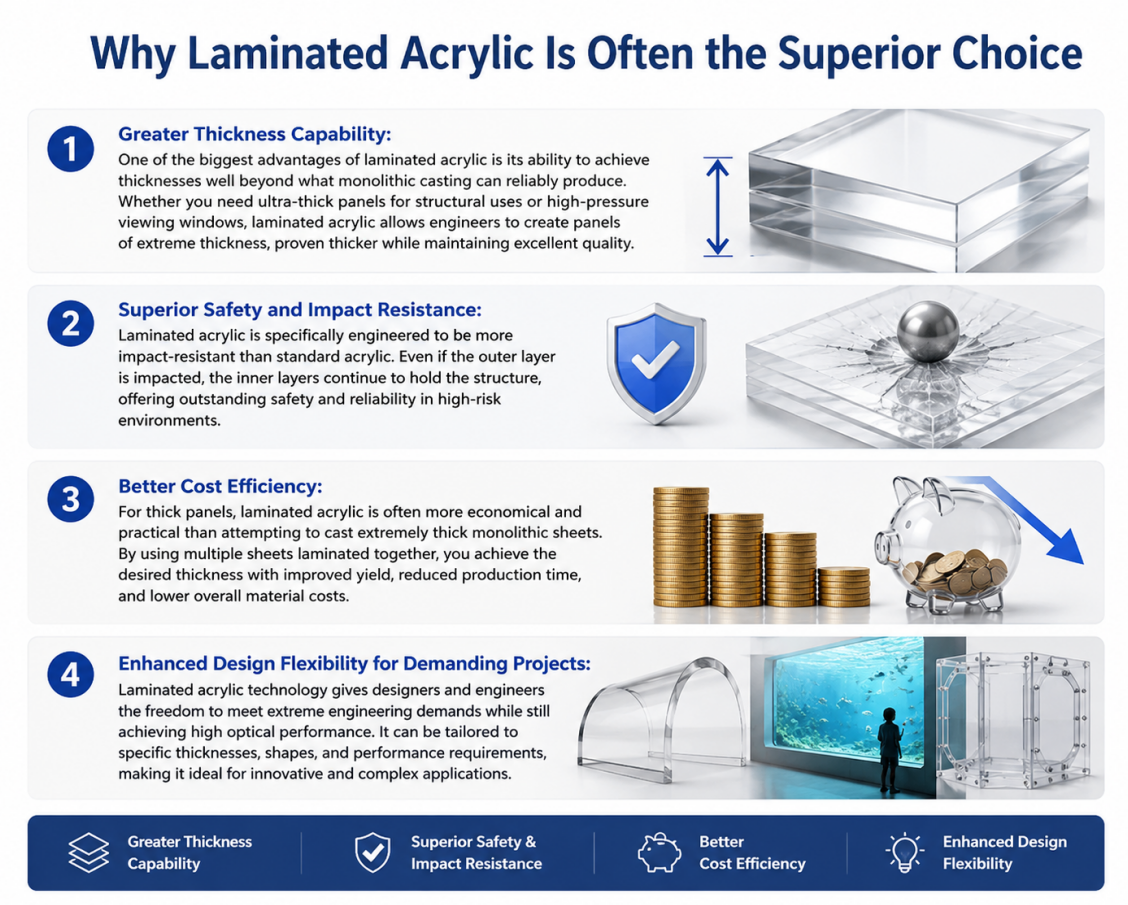
Why Laminated Acrylic Is Often the Superior Choice
1. Greater Thickness CapabilityOne of the biggest advantages of Laminated Acrylic is its ability to achieve thicknesses well beyond what monolithic casting can reliably produce. For deep oceanariums or high-pressure tanks, laminated technology allows engineers to create panels of 600mm, 800mm, or even thicker while maintaining excellent quality.
2. Superior Safety and Impact ResistanceLaminated Acrylic excels in safety-critical applications. The multi-layer structure provides excellent energy absorption. Even if the outer layer is impacted, the inner layers continue to hold the structure, offering built-in redundancy that monolithic panels cannot match.
3. Better Cost Efficiency for Thick PanelsFor ultra-thick requirements, laminated acrylic is often more economical and practical than attempting to cast extremely thick monolithic sheets.
4. Enhanced Design Flexibility for Demanding ProjectsLaminated technology gives designers more freedom to meet extreme engineering demands while still achieving high optical performance.
Real Project Applications
Leyu Acrylic has successfully applied Laminated Acrylic in numerous challenging projects where thickness and safety were paramount. In high-rise infinity pools, deep viewing tanks, and large cantilevered structures, laminated panels have proven their reliability and performance advantages.
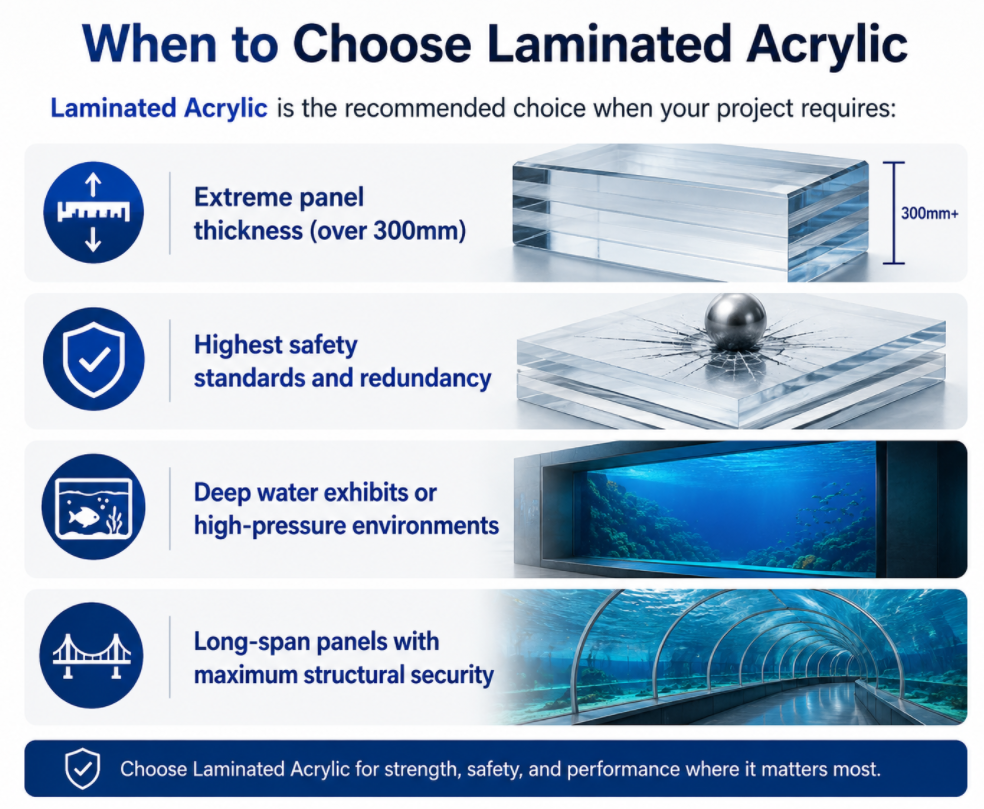
When to Choose Laminated Acrylic
Laminated Acrylic is the recommended choice when your project requires:
Extreme panel thickness (over 300mm)
Highest safety standards and redundancy
Deep water exhibits or high-pressure environments
Long-span panels with maximum structural security
Conclusion
In the comparison of Laminated Acrylic vs Monolithic Acrylic, Laminated Acrylic stands out as the superior solution for many large-scale, high-safety, and ultra-thick applications. Its ability to combine exceptional thickness, enhanced safety through multi-layer design, and better cost efficiency for demanding projects makes it the preferred material for forward-thinking architects and developers.
Leyu Acrylic has extensive experience in both monolithic and laminated technology. We can help you select the most suitable material and provide full engineering support for your project.
Contact Leyu Acrylic today to discuss whether Laminated Acrylic is the right choice for your underwater viewing panels or swimming pool project.
FAQ
1. Q: What is the main difference between Laminated Acrylic and Monolithic Acrylic?
A: Monolithic Acrylic is a single solid piece cast in one process, while Laminated Acrylic is made by bonding multiple layers together. Monolithic offers better clarity, but Laminated provides superior thickness and safety for demanding projects.
2. Q: Which one is stronger — Laminated or Monolithic Acrylic?
A: Laminated Acrylic is generally stronger in terms of impact resistance and safety. The multiple layers help absorb energy better and provide redundancy — if one layer is damaged, the others can still hold.
3. Q: When should I choose Laminated Acrylic over Monolithic?
A: Choose Laminated Acrylic when you need extreme thickness (over 300mm), higher safety redundancy, or very deep tanks where maximum structural security is required.
4. Q: Is Laminated Acrylic as clear as Monolithic Acrylic?
A: Laminated Acrylic has very good clarity, but Monolithic Acrylic usually offers slightly better optical transparency because it has no bonding layers.
5. Q: Can Laminated Acrylic be used for large seamless panels?
A: Yes. While Monolithic is excellent for seamless large panels up to 10m × 3m, Laminated Acrylic can also achieve large sizes and is often preferred when extra thickness is needed.
6. Q: Is Laminated Acrylic more expensive?
A: For standard thicknesses, Monolithic may be more cost-effective. However, for very thick panels, Laminated Acrylic is often more economical and practical to produce.
7. Q: Is Laminated Acrylic safe for aquarium and marine life?
A: Yes. Both types are made from high-quality, aquarium-grade PMMA. Laminated Acrylic is especially suitable for deep exhibits because of its enhanced safety features.
8. Q: What is the maximum thickness Leyu Acrylic can produce?
A: Leyu Acrylic can produce Monolithic Acrylic up to 800mm thick. Using Laminated technology, we can achieve even greater thicknesses for special high-safety projects.
9. Q: How long do these acrylic panels last?
A: With proper UV stabilization and maintenance, both Laminated and Monolithic Acrylic can maintain excellent performance and clarity for 20–30 years in aquarium and swimming pool applications.
10. Q: How do I decide which type is best for my project?A: It depends on your needs. If you prioritize maximum clarity and seamless appearance, choose Monolithic. If you need extreme thickness or extra safety, Laminated Acrylic is usually the better choice. Leyu Acrylic’s team can provide professional recommendations based on your specific requirements.
 العربية
 Русский
 Español
 Português
 English
 Français
 Deutsch
 italiano
 한국어
한국어 Nederlands
 Tiếng Việt
 ไทย
ไทย Polski
 Türkçe
 አማርኛ
አማርኛ ភាសាខ្មែរ
 Bahasa Melayu
 தமிழ்
தமிழ் Filipino
 Bahasa Indonesia
 magyar
 Română
 Čeština
 Српски
 हिन्दी
 فارسی
فارسی Kiswahili
 Slovenčina
 Slovenščina
 Norsk
Norsk Svenska
 Ελληνικά
 Suomi
Suomi עברית
עברית Dansk
Dansk Shqip
Shqip বাংলা
বাংলা Hrvatski
 Afrikaans
 Māori
Māori සිංහල
සිංහල Беларуская мова
 Bosanski
 ދިވެހި
 Esperanto
 guarani
 Hausa
Hausa ʻŌlelo Hawaiʻi
 Kurdî
Kurdî Lietuvių
 Македонски
 ਪੰਜਾਬੀ
 Runasimi
 Türkmençe
 isiZulu