When building modern aquariums, oceanariums, or underwater viewing facilities, one of the most important decisions is choosing the right material for the viewing panels. The debate of Acrylic vs Glass For Underwater Viewing Panels has been ongoing for years. Both materials have strengths, but they serve different needs.
This article provides a clear, honest, and detailed comparison of Acrylic vs Glass For Underwater Viewing Panels to help architects, developers, and aquarium owners make informed decisions.
1. Basic Comparison Overview
Acrylic vs Glass For Underwater Viewing Panels is primarily a trade-off between performance, design flexibility, weight, and cost.
Acrylic (also known as PMMA) is a high-performance transparent thermoplastic. Glass, typically tempered or laminated glass, is a traditional inorganic material.
Here is a quick summary table:
| Feature | Acrylic Panels | Glass Panels |
| Light Transmittance | 92%+ | 85-90% |
| Impact Strength | 10+ times stronger | Lower |
| Weight | About half of glass | Heavy |
| Design Flexibility | Excellent (curves, large seamless) | Limited |
| Maximum Panel Size | Up to 10m × 3m seamless | Smaller due to weight |
| UV Resistance | Excellent with stabilizers | Good |
| Long-term Clarity | 20–30 years | Can last long but heavier |
| Initial Cost | Higher | Lower |
| Installation Cost | Lower (lighter) | Higher |
2. Optical Clarity and Viewing Experience
In the comparison of Acrylic vs Glass For Underwater Viewing Panels, clarity is often the top priority.
Acrylic offers higher light transmittance (over 92%) and lower optical distortion. This means visitors see marine life with sharper detail and more natural colors. Glass can suffer from green tint in thicker panels, reducing visual quality.
For large underwater tunnels and panoramic windows, acrylic provides a “floating in the ocean” feeling that glass struggles to match.
To ensure every acrylic panel meets strict aquarium-grade optical standards, Leyu Acrylic performs rigorous quality inspections throughout the production process. These include light transmittance testing, haze measurement, stress distribution analysis, and long-term weather resistance simulation tests.
According to the latest Acrylic Inspection Report (Test No. STD-250814-A041-3) issued by Standard Testing Group Co., Ltd., Leyu Acrylic panels achieved excellent results: light transmittance reached 93.0% (GB/T 2410-2008) and 92.9% (ASTM D1003-21), with all other key items — such as tensile strength, impact strength, Vicat softening temperature, and flexural modulus — fully meeting or exceeding the required standards.
To view the detailed Acrylic Inspection Report, please click the link or attachment below. It contains comprehensive quality testing data and certification information for Leyu Acrylic underwater viewing panels.
 Acrylic inspection report -Leyu.pdf
3. Strength and Safety
Acrylic vs Glass For Underwater Viewing Panels shows a clear winner in safety.
Acrylic is significantly more impact-resistant. If damaged, it cracks into blunt pieces rather than dangerous sharp shards. This is critical in public aquariums where visitor safety and marine animal protection are paramount.
Leyu Acrylic panels are engineered with safety factors of 3–4 times the expected load, making them suitable for deep water and large spans.
4. Weight and Structural Design
Acrylic is approximately half the weight of glass of equivalent thickness. This advantage is huge when designing large acrylic panels for aquariums.
Lighter panels reduce the load on the building structure, lower foundation costs, and make rooftop and elevated pools more feasible. In contrast, thick glass requires much stronger (and more expensive) support structures.
5. Design Flexibility
This is where Acrylic vs Glass For Underwater Viewing Panels shows the biggest difference.
Acrylic can be thermoformed into beautiful curves, cylinders, tunnels, and complex shapes. Leyu Acrylic has produced seamless panels up to 10m × 3m and helped build 300-meter tunnels (Xuzhou Oulebao) and 155-meter tunnels (Shanghai Haichang).
Glass is rigid and difficult to curve at large scales, limiting creative architectural possibilities.
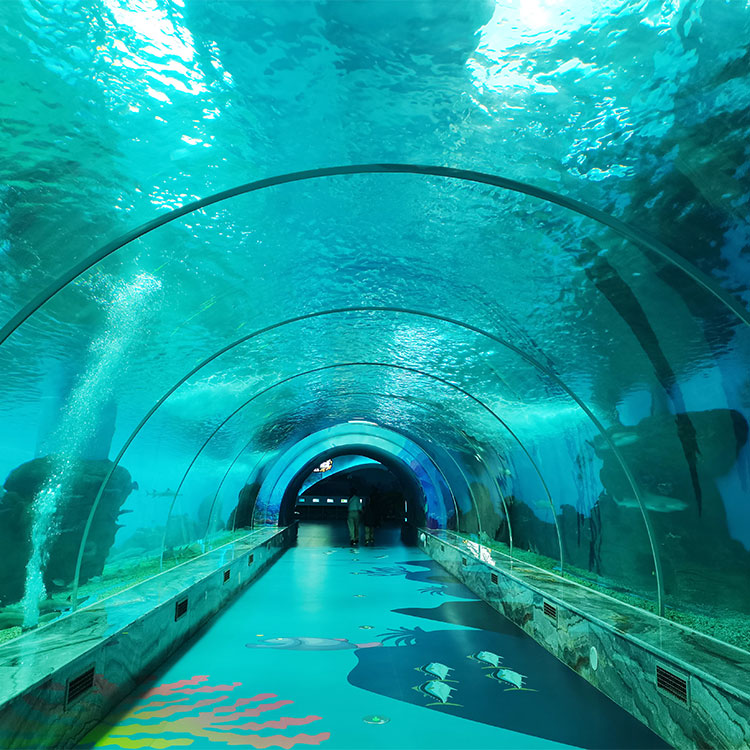
Aquarium Tunnel - leyu acrylic
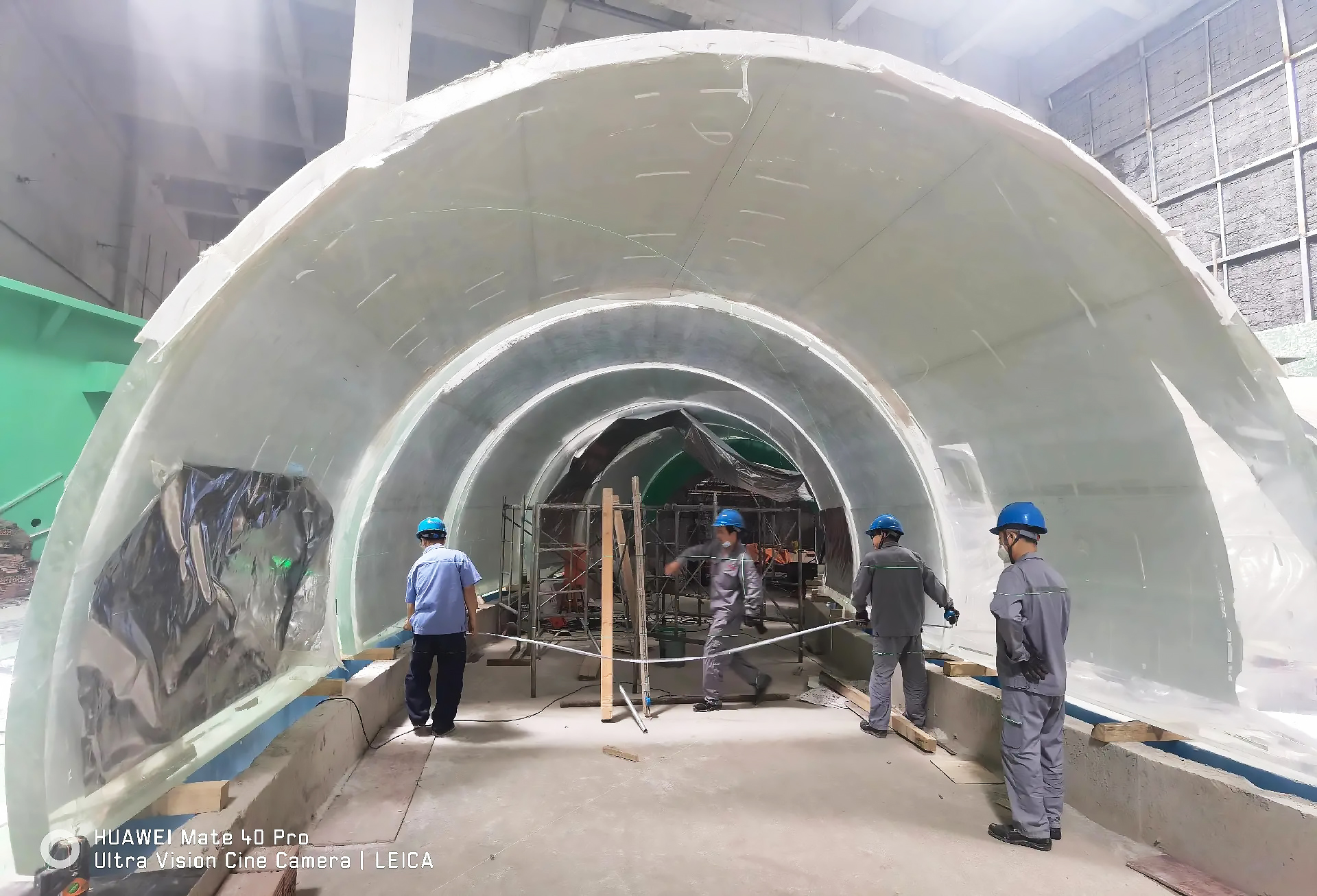
Aquarium Tunnel - leyu acrylic
6. Durability and Maintenance
Both materials are durable, but acrylic performs better in real aquarium environments.
High-quality acrylic with UV stabilizers resists yellowing for 20–30 years. It also handles pool chemicals well. Maintenance is simple — regular cleaning with mild soap and soft cloths is sufficient.
7. Real Project Performance
Leyu Acrylic has extensive experience in Acrylic vs Glass For Underwater Viewing Panels applications:
Shanghai Haichang Ocean Park: 155-meter main underwater tunnel using 140mm thick curved acrylic panels (5m diameter).
Xuzhou Oulebao Polar Ocean World: 300-meter longest indoor acrylic tunnel in China.
Nanchang Wanda Ocean Park: One of China’s largest acrylic viewing windows (8.5m high × 25m wide × 740mm thick).
Multiple projects with 13m × 8.3m massive viewing windows.
These real cases prove that acrylic consistently outperforms glass in large-scale underwater viewing applications.
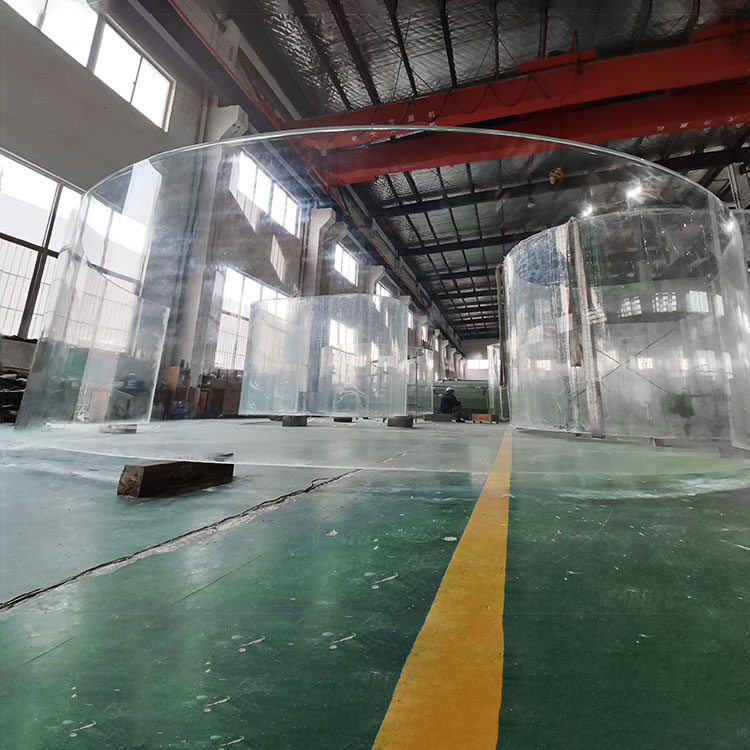
Acrylic Panel - Leyu
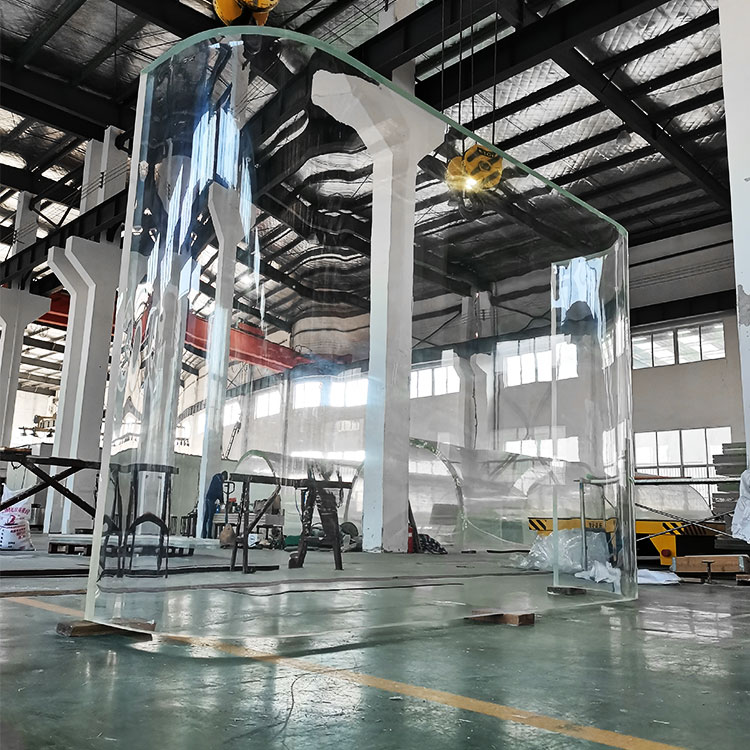
Acrylic Panel - Leyu
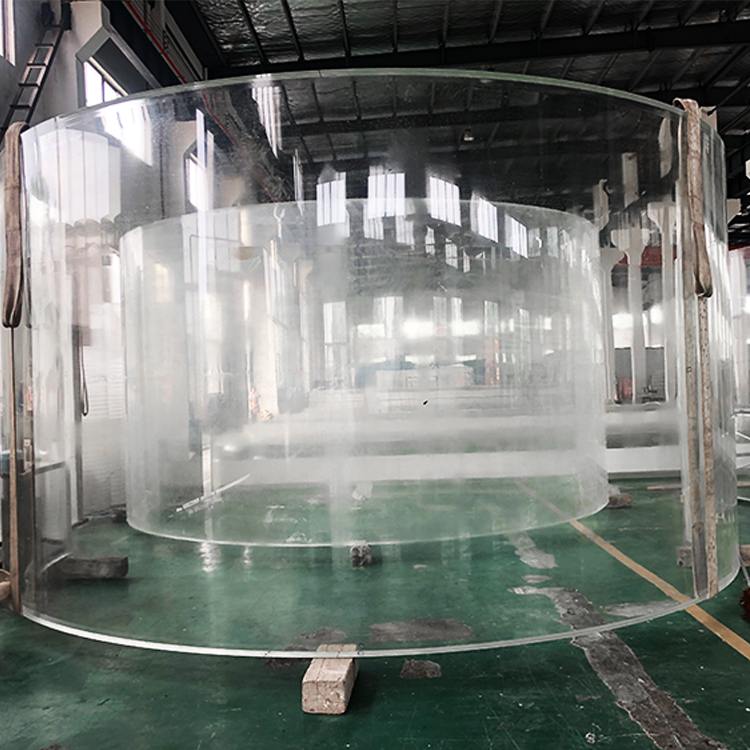
Acrylic Panel - Leyu
8. Cost Analysis
Acrylic vs Glass For Underwater Viewing Panels — acrylic has higher material cost but lower overall project cost in many cases due to lighter weight, easier installation, and design savings.
For small projects, glass may be cheaper. For medium to large aquariums and signature viewing experiences, acrylic usually delivers better long-term value.
9. When to Choose Acrylic vs Glass
Choose Acrylic when you need:
Large spans or curved designs
Maximum clarity and immersive experience
Reduced structural load
Long-term safety and low maintenance
Choose Glass when:
Budget is very tight for small displays
Traditional look is preferred
Very high scratch resistance is needed in low-impact areas
Conclusion
In the comparison of Acrylic vs Glass For Underwater Viewing Panels, acrylic is clearly the superior choice for most modern large-scale aquarium and oceanarium projects. Its combination of clarity, strength, lightness, and design flexibility makes it the material of the future.
Leyu Acrylic has nearly 30 years of experience manufacturing high-quality large acrylic panels for aquariums and stands ready to support your project from concept to completion.
Contact Leyu Acrylic today to discuss your underwater viewing panel requirements.
FAQ
1. Q: Which is better for large aquarium viewing panels — acrylic or glass?
A: For most large-scale aquarium and oceanarium projects, acrylic is the better choice. It offers superior clarity, much higher impact resistance, lighter weight, and better design flexibility compared to glass.
2. Q: Is acrylic really clearer than glass?
A: Yes. High-quality acrylic has over 92% light transmittance and very low distortion, while thick glass often shows a green tint that reduces visual quality.
3. Q: How much stronger is acrylic than glass?
A: Acrylic is more than 10 times stronger in impact resistance than tempered glass. This makes it much safer for public aquariums where panels must withstand water pressure and accidental impacts.
4. Q: Why do most modern oceanariums prefer acrylic panels?
A: Because acrylic is lighter, can be formed into large curved shapes and seamless tunnels, and provides a more immersive viewing experience. It also reduces structural costs significantly.
5. Q: Does acrylic turn yellow over time in aquariums?
A: High-quality UV-stabilized acrylic like Leyu’s resists yellowing very well and can maintain excellent clarity for 20–30 years with proper care.
6. Q: Is acrylic safe for marine animals?
A: Yes. Aquarium-grade acrylic is made from food-contact safe materials. It does not release harmful substances and is widely used in major oceanariums worldwide.
7. Q: Which is more expensive — acrylic or glass panels?
A: Acrylic has a higher material cost, but the overall project cost is often lower due to reduced structural requirements, lighter weight, and easier installation.
8. Q: Can acrylic panels be used for very deep aquarium tanks?
A: Yes. By increasing panel thickness (up to 800mm or more) and using proper engineering calculations, acrylic is suitable for deep water exhibits and large spans.
9. Q: How do you maintain large acrylic viewing panels?
A: Maintenance is simple. Clean regularly with mild soap and soft microfiber cloths. Avoid abrasive cleaners or ammonia. Professional polishing can restore minor scratches.
10. Q: Can Leyu Acrylic help with both design and installation of underwater viewing panels?
A: Absolutely. Leyu Acrylic provides full one-stop service — from structural design, material selection, and manufacturing to professional installation guidance — for acrylic vs glass underwater viewing panel projects.
 العربية
 Русский
 Español
 Português
 English
 Français
 Deutsch
 italiano
 한국어
한국어 Nederlands
 Tiếng Việt
 ไทย
ไทย Polski
 Türkçe
 አማርኛ
አማርኛ ភាសាខ្មែរ
 Bahasa Melayu
 தமிழ்
தமிழ் Filipino
 Bahasa Indonesia
 magyar
 Română
 Čeština
 Српски
 हिन्दी
 فارسی
فارسی Kiswahili
 Slovenčina
 Slovenščina
 Norsk
Norsk Svenska
 Ελληνικά
 Suomi
Suomi עברית
עברית Dansk
Dansk Shqip
Shqip বাংলা
বাংলা Hrvatski
 Afrikaans
 Māori
Māori සිංහල
සිංහල Беларуская мова
 Bosanski
 ދިވެހި
 Esperanto
 guarani
 Hausa
Hausa ʻŌlelo Hawaiʻi
 Kurdî
Kurdî Lietuvių
 Македонски
 ਪੰਜਾਬੀ
 Runasimi
 Türkmençe
 isiZulu